7 Days Shipping in “Ship Now” Collection
WORLDWIDE SHIPPING EXCEPT INDIA
Minimum Order Value: $1000
31 October, 2026
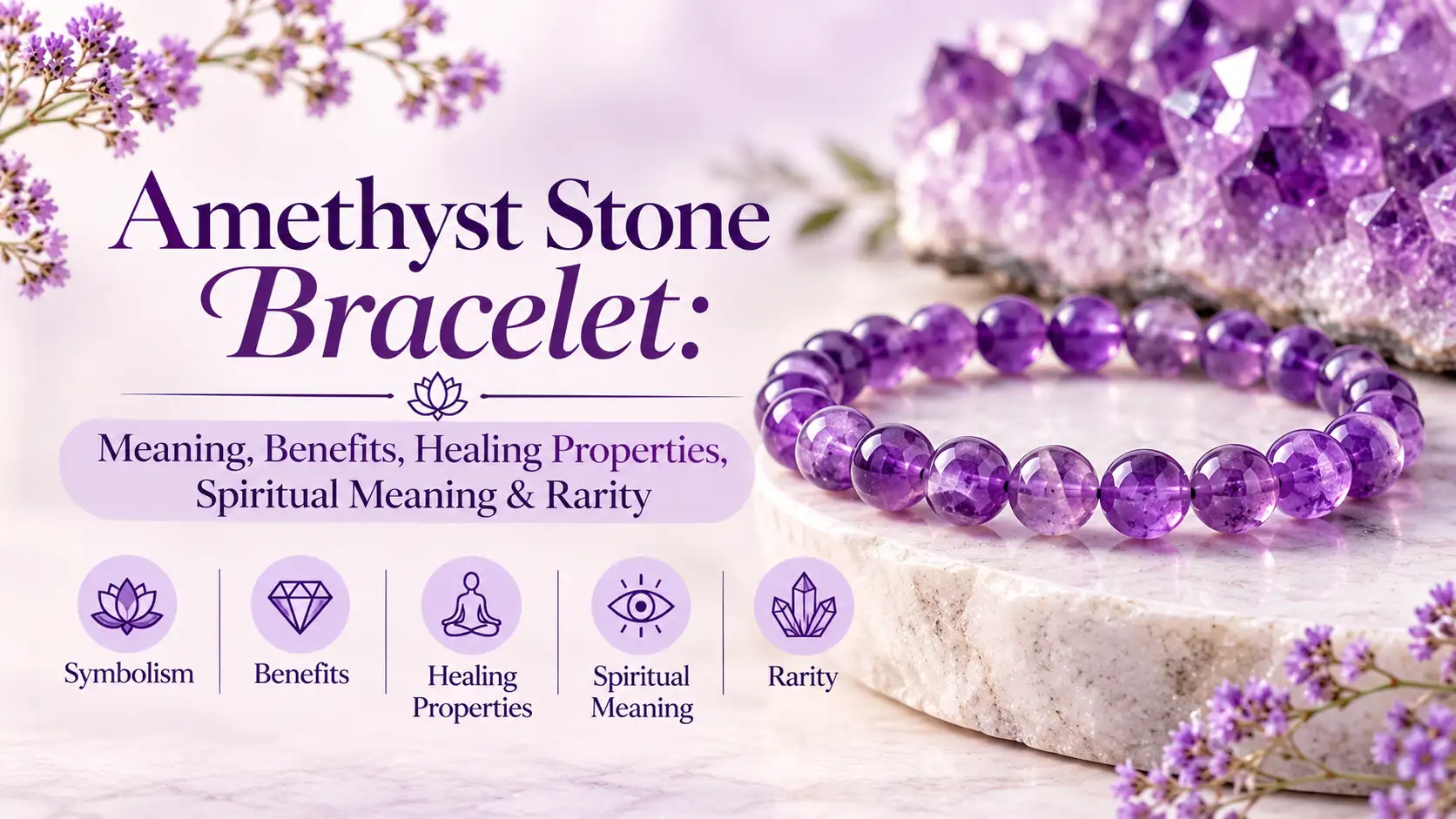
amethyst stone bracelet meaning benefits healing properties spiritual meaning and rarity
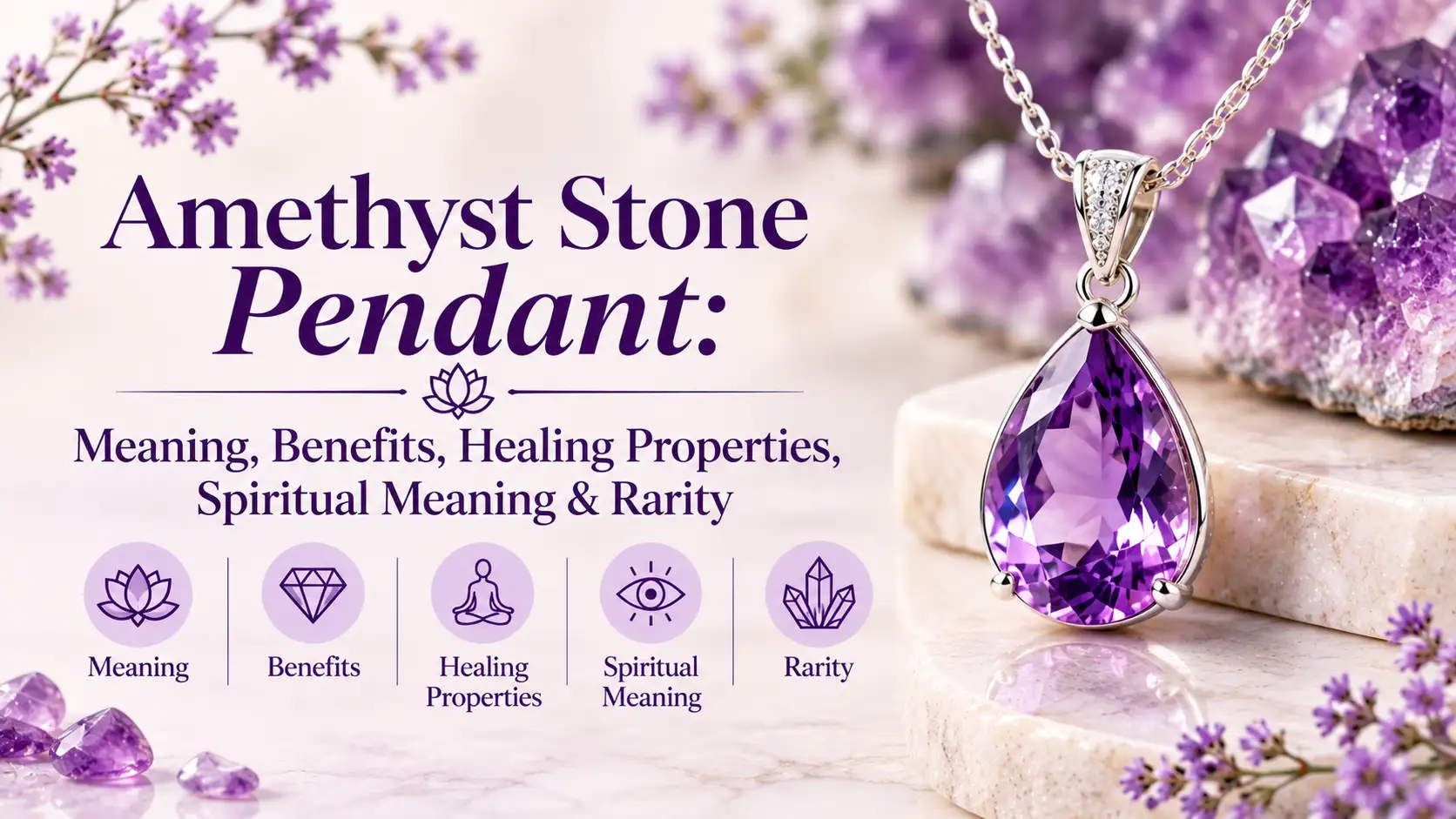
amethyst stone pendant meaning benefits healing properties spiritual meaning and rarity
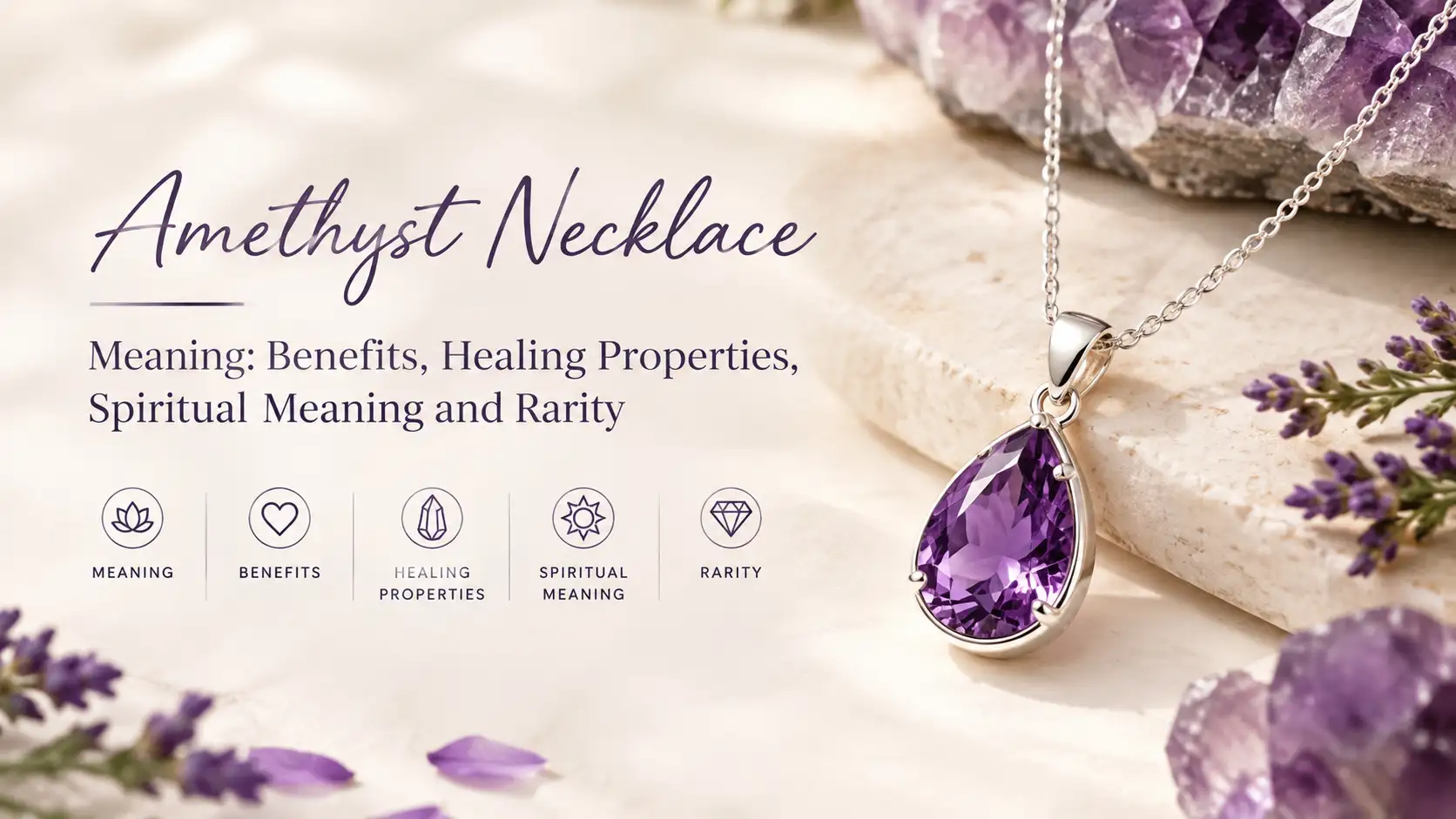
amethyst necklace meaning benefits healing properties spiritual meaning and rarity
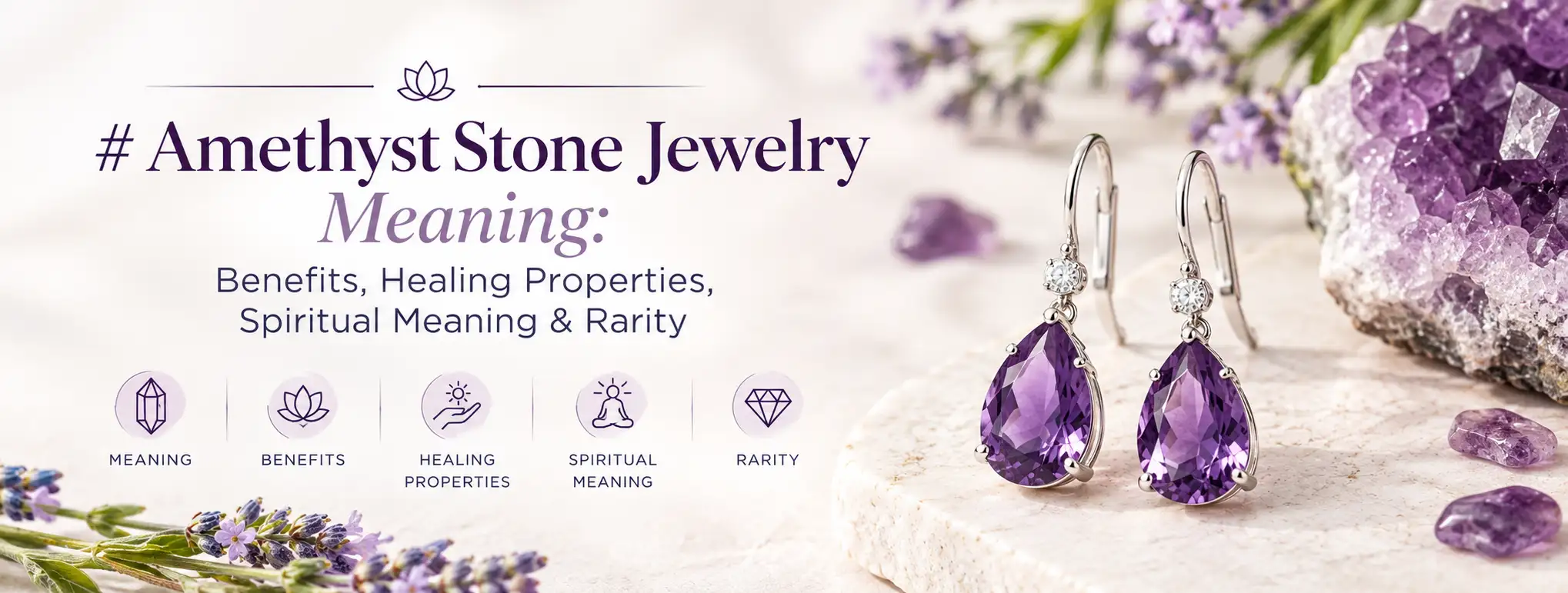
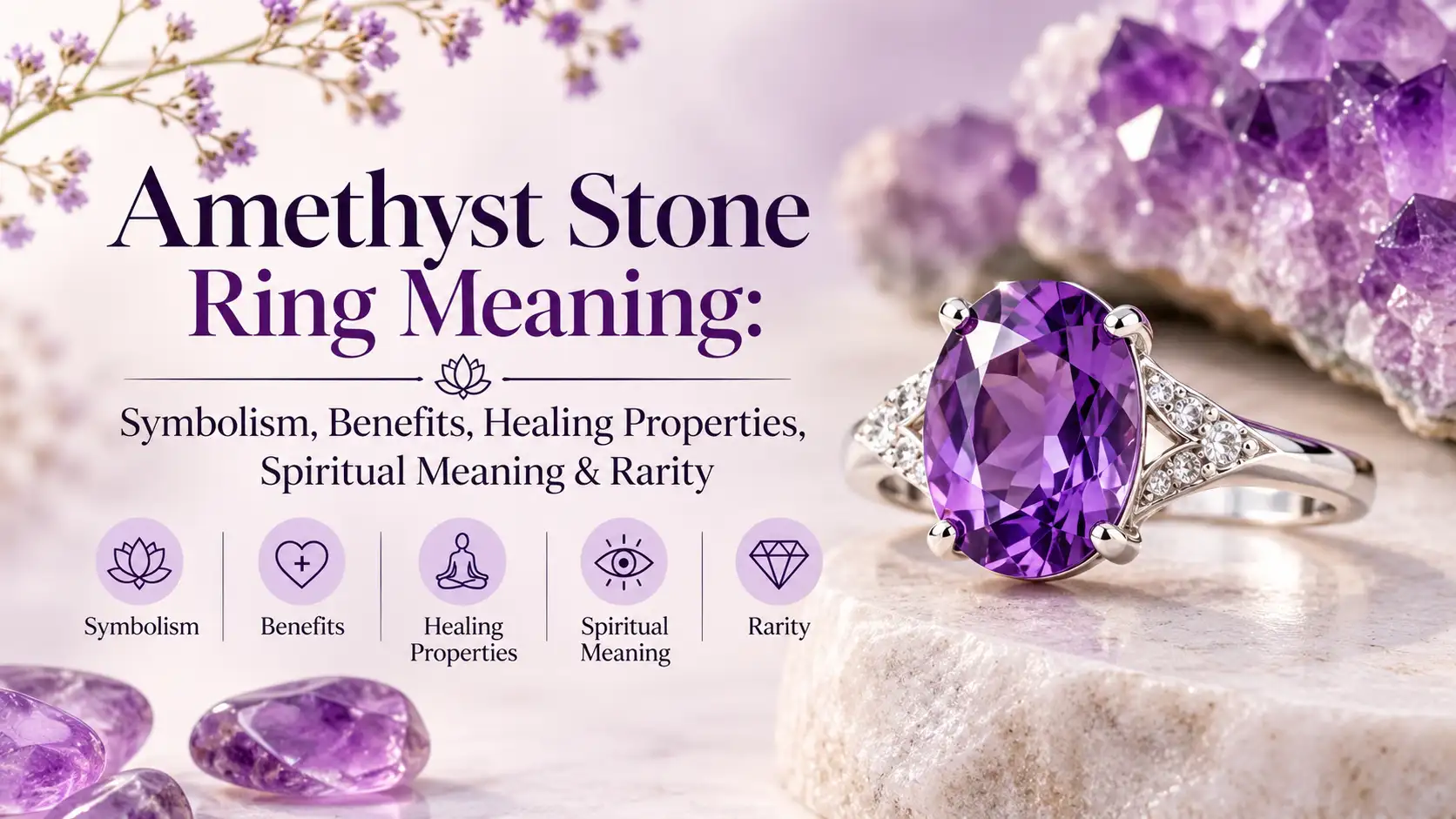
amethyst stone jewelry meaning benefits healing properties spiritual meaning and rarity
An amethyst ring symbolizes clarity, calm, and self-control. People have worn amethyst for thousands of years as a reminder to keep a clear head and protect their peace. That same meaning is why it's still chosen today, whether as a February birthday gift, a promise ring, or a quiet personal talisman.
It's also a stone with a strange history. Amethyst once sat beside rubies and sapphires as one of the most precious gems in the world, then lost most of its price premium when huge deposits turned up in South America. So is it rare? Some of it is very rare. Most of it isn't, and that difference matters a lot when you're buying a ring.
Below, we cover what an amethyst ring means, its spiritual meaning and benefits, what the healing claims do (and don't) rest on, how rare amethyst really is, what it should cost, which finger to wear it on, and how to keep it looking good for decades.
Amethyst is the purple variety of quartz, and the most valued member of the quartz family. Here are the essentials in one place.
Sources: GIA amethyst overview, GIA care guide.
An amethyst ring stands for a clear mind, emotional balance, and quiet inner strength. Those meanings didn't come out of nowhere. Each one traces back to how people have actually used the stone over the centuries.
The word amethyst comes from the ancient Greek amethystos, meaning "not drunk." The Greeks believed the stone kept its wearer sober and sharp. Today, people read that more broadly: an amethyst ring is a reminder to think before you act, whatever your particular temptation is.
In modern crystal practice, amethyst is the classic calming stone. It's what people reach for during stressful seasons, grief, or burnout. A ring keeps that reminder in plain sight, which is the whole point.
Catholic bishops have worn amethyst rings for centuries, and the stone became tied to devotion, humility, and self-restraint. That's why amethyst still reads as a spiritual stone, even to people who aren't religious.
In the ancient world, purple dye was so costly that it became a mark of power, and purple gems borrowed that prestige. Amethyst still appears in the British coronation regalia. Wearing one today is a small nod to dignity and self-worth, without the royal budget.
Legend says St. Valentine wore an amethyst ring carved with an image of Cupid. Amethyst is also the traditional gem for the 6th and 17th wedding anniversaries. As a romantic gift, it says "honest, steady love" rather than "look at my rock."
Old legends held that amethyst kept soldiers level-headed in battle and merchants sharp in business. Many people still wear it as a kind of shield against negativity, stress, and other people's bad moods.
Because it's tied to clarity and self-control, an amethyst ring makes a meaningful marker for a new chapter: a new job, a move, a sobriety anniversary, or simply a hard year finally behind you.
So if someone gives you an amethyst ring, the message is usually a mix of "stay true to yourself" and "I want good things for you." Not a bad thing to carry around on your hand.
Most of what amethyst "means" today comes from three places: Greek ideas about wine, the medieval church, and royal treasuries. People have been setting it in jewelry for around 4,000 years, so the stories have had plenty of time to pile up.
Amethyst's wine-like color tied it to Dionysus, the Greek god of wine (Bacchus to the Romans). From there, the logic ran a little sideways: a stone linked to wine should also protect you from wine. Cups studded with amethyst were thought to keep the drinker sober.
You've probably read the story. A young woman named Amethyste crosses paths with Bacchus, who means her harm. The goddess Diana turns her into clear crystal to protect her, and a remorseful Bacchus pours wine over the stone, staining it purple.
It's a lovely story. It just isn't ancient. No Greek or Roman text tells it. The French poet Rémy Belleau invented it in a poem published in 1576, and even the version with Bacchus's tigers is French in origin. So when a website calls it "ancient Greek mythology," it's off by about two thousand years.
The closest genuine ancient link is a passage in the Dionysiaca, a late-antique epic by the poet Nonnus, in which Dionysus receives an amethyst from his grandmother Rhea to keep wine drinkers sane.
Purple has long been a color of the church, and amethyst became the classic stone for bishops' rings. It was also counted among the emblems of the twelve apostles. Legend adds that St. Valentine wore an amethyst ring engraved with Cupid, which is where much of its romantic meaning comes from.
Royalty wanted it too. Until the 1800s, fine amethyst was valued as highly as ruby, emerald, and sapphire, according to the Gemological Institute of America (GIA). It still appears in Britain's coronation regalia.
There's also a claim you'll find on dozens of crystal sites: that amethyst sharpens the mind and drives off evil thoughts. It's often credited to Leonardo da Vinci. GIA credits it to Camillo Leonardi, a Renaissance astrologer, which makes a lot more sense.
That royal price tag collapsed in the 19th century, when huge deposits were discovered in Brazil. When American jewelers standardized the modern birthstone list in 1912, they made amethyst February's official stone.
Today it lives a double life. It's fine enough for crown jewels and affordable enough for a high school class ring, and very few gems can say that.
Spiritually, amethyst is a stone of clarity, intuition, and protection. It's tied to the crown and third eye chakras, and people use it to deepen meditation, quiet a busy mind, and sleep more peacefully.
Amethyst is linked to two chakras, and they're two different things, even though you'll sometimes see them blurred together. The crown chakra (Sahasrara) sits at the top of the head and is about spiritual connection, the feeling of being part of something larger. The third eye chakra (Ajna) sits between the brows and governs intuition and insight.
In the seven-chakra color system, the crown is violet and the third eye is indigo, and amethyst sits right between them. That's why it's one of the most common stones in chakra jewelry.
Many people hold amethyst or wear it while meditating, using it as a physical cue to slow down. It also has a long association with sleep. The old habit is to tuck a piece under your pillow to keep nightmares away and invite clearer dreams.
With a ring, the simple version is this: take it off before bed and set it on your nightstand or under your pillow. You keep the ritual without sleeping in a ring, which is easier on the prongs and on your fingers.
Amethyst was one of the stones on the breastplate of ancient Israel's high priest, and the Book of Revelation lists it among the foundation stones of the walls of the heavenly Jerusalem. In medieval England, King Edward the Confessor is said to have worn it to ward off disease. Christian tradition later tied it to humility and devotion, which is how it ended up on bishops' hands.
In Jyotish (Vedic astrology), amethyst is called Jamunia or Katela in Hindi and is linked to Saturn (Shani). It's used as an upratna, a more affordable substitute for blue sapphire (Neelam). Traditional guidance is to set it in silver, wear it on the middle finger, and put it on for the first time on a Saturday. Astrologers usually recommend checking your birth chart first, because Saturn's stones are considered powerful.
In the traditional Western zodiac list, amethyst belongs to Pisces. Because it's also February's birthstone, Aquarius (born January 20 to February 18) claims it too. In Vedic astrology, it's recommended mainly for Capricorn and Aquarius, the two signs ruled by Saturn. If you like matching stones to your sign, see our guide to gemstone jewelry by zodiac sign.
Most of the benefits people describe are emotional: more calm, sharper focus, and a steady reminder of what they're working toward. Then there are practical benefits nobody argues about, like durability and value.
Why a ring, specifically? Because you see your hands all day. A pendant sits out of view; a ring catches your eye every time you type, drive, or reach for your coffee. That makes it a far better reminder.
A calmer baseline. Many wearers say the ring works like a pause button. A glance at it is a cue to breathe before reacting.
Better sleep habits. Taking the ring off and setting it by the bed can become part of a wind-down routine, which is where much of amethyst's sleep reputation comes from.
Focus and clearer decisions. Students and professionals wear it as a "think it through" reminder before exams, negotiations, and big calls.
Support for sobriety and breaking habits. Given its name, amethyst is a natural symbol for recovery milestones. It works best as a reminder of a commitment you're already keeping.
Comfort through grief and change. People often give amethyst after a loss, a divorce, or a hard move, as a quiet "you'll get through this."
A sense of protection. Whether you see it as energy or symbolism, many people simply feel steadier wearing it.
Love and loyalty. As the 6th and 17th anniversary gem, it's an easy way to say "still choosing you."
It's tough enough for daily wear. At 7 on the Mohs scale with good toughness, amethyst handles everyday life far better than opal, pearl, or turquoise.
Big stones stay affordable. GIA notes that amethyst's price per carat doesn't climb much with size, so a bold cocktail ring is actually within reach.
It flatters almost everyone. Reddish-purple stones glow against yellow gold, while cooler, bluish stones look crisp in white gold or sterling silver.
It's easy to match. Even small amethysts can be richly colored, so stacking bands and matched sets look consistent.
Many women choose amethyst during big transitions: a new job, motherhood, a divorce, or a milestone birthday. It's the classic February birthday gift, and a popular "right-hand ring" that women buy as a promise to themselves.
You'll also see claims that amethyst eases PMS, hormonal swings, or menopause symptoms. The bishop's ring is the original amethyst statement ring, and bold bezel-set and signet-style amethyst rings look great on any hand.
In crystal healing, amethyst is credited with easing anxiety, insomnia, headaches, and cravings. No scientific study has shown that the stone itself does any of that. The ritual of wearing it can still help, the same way other calming habits do. We think you deserve both sides, so here they are.
Emotional: eases stress, anxiety, anger, and grief
Mental: quiets overthinking and sharpens focus
Sleep: reduces nightmares and restless nights
Habits: supports sobriety and self-control
Physical: relieves headaches and "supports" immunity, hormones, and circulation
There's very little research on crystal healing, and what exists doesn't support it. In a 2001 experiment led by psychologist Christopher French at Goldsmiths, University of London, 80 volunteers meditated while holding either real quartz or fake crystals made of glass.
Both groups reported the same kinds of sensations, like tingling and warmth, and the people who believed most in the paranormal felt the most. French's conclusion was that the effects came from the power of suggestion, not the stone.
Amethyst is plentiful as a mineral, but top-quality amethyst is genuinely rare. Most stones sell for under $20 per carat, top-color gems run about $30 to $50, and exceptional stones can reach around $100 per carat.
Until the 19th century, amethyst was priced like ruby and emerald. Then Brazil's enormous deposits came online, including hollow geodes large enough to walk into, and supply outran demand for good. Amethyst is still the most valued variety of quartz. It's just no longer scarce.
That's also why the old "precious vs. semi-precious" split doesn't tell you much. It was always a market label, not a scientific one, and amethyst is the best proof.
Color comes first. The finest amethyst is a strong purple to reddish purple with no brownish tint and no color zoning visible from the top, according to GIA. Too dark, and it can look almost black in dim light.
Clarity is expected. Much faceted amethyst is eye-clean, so visible inclusions, especially in pale stones, cut the value sharply.
Size matters less than you'd think. Price per carat doesn't rise much with size. The real premium is for color.
Origin matters less than the label suggests. GIA notes that where an amethyst was mined doesn't add value on its own; color does. The exception is US-mined Four Peaks amethyst (more below), which sells at a premium partly because it's American.
"AAA" isn't a standard. There's no official grading scale for amethyst, so AAA or "gem grade" labels are each seller's own system.
Trade names describe color, not where a stone came from. "Siberian" once referred to amethyst from Russia, but that supply is long gone, so today it's simply shorthand for the top color. You may also hear "bishop grade" for the finest deep purple, a nod to bishops' rings.
Source: How to Find Rocks amethyst price guide, updated September 2026.
In a finished ring, the stone is often the cheaper part. A 2-carat commercial amethyst might cost $6 to $40 on its own, while the 14K gold setting around it often costs several times that.
Four Peaks, Arizona. This is the only US mine producing high-quality gem amethyst, perched around 6,700 feet up in the Tonto National Forest and reachable only by helicopter or a three-hour hike. In a Rapaport report, the mine's partners said roughly 1,000 pounds of rough came out every six months, and only about 30 pounds of it was good enough to cut. Its deep purple stones with red flashes sell for about $10 to $100 per carat, several times the price of Brazilian material.
South Carolina. Amethyst has been the official state gemstone since 1969. A 15-pound cluster of rich purple crystals found near Due West in 1965 ranks among the best US finds, and Due West crystals went on display at the Smithsonian and even appeared on a 1974 postage stamp.
Ametrine. Found in Bolivia, these crystals are part amethyst and part citrine, purple and golden in a single stone.
"Green amethyst." It isn't really amethyst. The correct name is prasiolite, and it's usually made by heat-treating certain amethyst.
Yes. Amethyst rates 7 on the Mohs scale and has good toughness, so it's fine for a ring you wear every day. Just expect the facet edges to soften over the years, and plan on an occasional repolish.
Here's the part most guides skip. Ordinary dust and sand are mostly quartz, the same mineral as amethyst, GIA explains. So everyday grit can slowly scuff amethyst in a way it can't scuff a sapphire (9) or a diamond (10). GIA also warns that sudden temperature changes can crack amethyst, and that some stones fade under prolonged, intense light.
A few habits go a long way:
Take it off for the gym, gardening, cleaning, and the beach.
Don't go from a hot tub straight into a cold pool with it on.
Keep it out of hot cars and off sunny windowsills.
Before any torch work, like resizing or retipping, ask your jeweler to remove or protect the stone, since amethyst shouldn't be exposed to heat.
It can be, if you go in with clear expectations. GIA calls amethyst suitable for everyday wear but notes it will show wear over time and may need repolishing. In return, you get a large, richly colored center stone for a fraction of what a sapphire or diamond costs, plus a meaning (clear-headed, faithful love) that suits a marriage pretty well.
If you go this route, choose the setting for protection:
Bezel or halo settings guard the edges of the stone.
A lower profile catches less on sweaters, doorframes, and gym equipment.
V-prongs protect the pointed tips of pear, marquise, and heart shapes.
Six prongs hold a larger center stone more securely than four.
Yellow gold warms up reddish-purple stones and gives a vintage feel.
White gold, platinum, or sterling silver make cooler, bluish-purple stones look crisp and modern.
Rose gold turns pale Rose de France stones soft and romantic.
Silver is also the traditional choice in Vedic astrology.
You can see both looks side by side in our 14K gold amethyst collection and our sterling silver gemstone rings.
In Western jewelry, there's no rule: wear it on whichever finger feels right. If you follow a tradition, though, the finger carries its own meaning.
The bishop's tradition comes from the Episcopal Church's own glossary, which notes that modern episcopal rings are often gold set with an amethyst and worn on the right ring finger.
In many crystal traditions, the left hand is "receptive" and the right hand is "projective." Wear amethyst on the left to draw calm in, or on the right to send an intention out into the world. On a practical level, your non-dominant hand takes fewer knocks, which matters for a stone with a hardness of 7.
Any finger she likes. For an engagement ring, the left ring finger is the US custom. In Vedic astrology, the middle finger is standard, though astrologers differ on the hand: some say the right hand for everyone, and others say the left hand for women. When in doubt, choose the hand you'll see most and that's least likely to get bumped.
Anyone can wear amethyst. It's quartz, it's non-toxic, and there's no physical risk in wearing it. The "shouldn't" advice you'll find online comes from astrology or from practical wear concerns.
were born in February, or you're a Pisces or Aquarius
want a daily reminder to stay calm, focused, or sober
are marking a new chapter or a hard-won milestone
want an alternative engagement or promise ring and don't mind a little maintenance
love purple and want a lot of color for your money
Follow Vedic astrology. Amethyst carries Saturn's influence in Jyotish, so astrologers usually check your chart before recommending it. Traditional guidance also says not to wear it with ruby, pearl, or red coral, the stones of the Sun, Moon, and Mars.
Are very hard on your hands. If you lift weights, climb, or work in construction, choose a bezel setting, wear amethyst as a pendant instead, or consider sapphire for an everyday ring.
Want it to treat a health condition. It won't, and it shouldn't replace medical care.
Keep jewelry in sunny spots. Prolonged, intense light can fade some amethyst.
Glass fakes are often easy to spot. Lab-grown amethyst is a different story: it has the same chemistry and hardness as natural amethyst, so only a gem lab can tell the two apart with certainty.
Tiny round gas bubbles inside the stone
Soft, rounded facet edges or faint mold lines
It warms up almost immediately in your hand
A price that seems too good for a stone that looks too perfect
Natural amethyst often shows faint, angular bands of lighter and darker purple, called color zoning, especially when you look through the side. That's normal, and it's actually a reassuring sign.
Lab-grown amethyst has been sold for decades. It isn't "fake," since it's real quartz, but it's usually worth less than natural, and it should be clearly labeled. Gemologists separate the two by studying internal growth patterns and inclusions under magnification, sometimes backed by lab instruments. Home tests can't do this.
GIA says amethyst is rarely treated, but heating is sometimes used to lighten very dark stones. Heat can also turn amethyst yellow, which is how a lot of the citrine on the market is made.
Ask in writing whether the stone is natural or lab-grown, and whether it's been treated.
Know the rules. Under the FTC's Jewelry Guides, a lab-grown stone should be labeled "laboratory-grown," "laboratory-created," or something similar, with equal prominence, and the word "faux" doesn't count (16 CFR 23.25). Sellers should also disclose treatments that aren't permanent, need special care, or significantly affect value (16 CFR 23.24).
For a significant purchase, get an independent lab report. GIA recommends one, though it notes the report's cost is high relative to the value of most amethyst.
Skip DIY scratch tests. They prove very little and can chip a real stone.
Clean it with warm, soapy water, keep it away from heat and harsh chemicals, and don't leave it sitting in strong sunlight. That's 90% of it.
You'll find conflicting advice online about ultrasonic and steam cleaners. Here's what GIA's care guide actually says: warm soapy water is always safe, ultrasonic cleaners are usually fine unless the stone is dyed or fracture-filled, and steam cleaning isn't recommended because amethyst shouldn't be exposed to heat.
Soak the ring for a few minutes in warm water with a drop of mild dish soap.
Brush gently with a soft toothbrush, especially behind the stone, where lotion and soap collect.
Rinse well and pat dry with a lint-free cloth.
To keep it looking new:
Store it in its own pouch or compartment. Diamonds and sapphires will scratch it, and it can scratch softer gems like opal and pearl.
Keep it away from bleach, pool chlorine, and harsh household cleaners. They're hard on gold and silver, and some alkaline cleaners can damage the stone itself.
Have a jeweler check the prongs once a year.
If you work with amethyst energetically, these methods are gentle on the stone:
Moonlight. Leave it on a windowsill overnight, ideally under a full moon, and bring it in before the morning sun hits. Here's our guide to charging crystal jewelry with full moon energy.
Sound. A few minutes near a singing bowl, chime, or bell.
Smoke. Pass it through sage or palo santo smoke, well away from the flame.
Selenite or quartz. Rest it on a selenite plate or a quartz cluster overnight.
Skip sunlight "charging," since it can fade the color. Skip salt-water soaks too, because salt can corrode metal and lodge in the setting. And skip anything hot.
Wearing an amethyst ring usually signals a commitment to clarity, calm, and self-control. It's also tied to spiritual wisdom, faithful love, and protection. For many people, it's a personal reminder of an intention, such as staying sober, staying patient, or starting fresh.
Spiritually, amethyst is used to quiet the mind, deepen meditation, and strengthen intuition. It's linked to the crown and third eye chakras and is traditionally seen as a protective stone. Its effects are spiritual and symbolic rather than physical.
There's no physical reason anyone can't wear amethyst. In Vedic astrology, though, it's Saturn's stone, so astrologers usually check your birth chart first and advise against pairing it with ruby, pearl, or red coral. People who are very rough on their hands may also prefer a protective setting or a harder gem.
Pisces is the sign most traditionally linked to amethyst, and Aquarius claims it as February's birthstone. In Vedic astrology, it's recommended mainly for Capricorn and Aquarius, the two signs ruled by Saturn.
Any finger she likes. The left ring finger is the US custom for engagement rings, and the middle finger is standard in Vedic astrology. Many women also wear amethyst on the right hand as a self-purchased "right-hand ring."
In love, amethyst stands for sincere, faithful, clear-headed devotion. Legend says St. Valentine wore an amethyst ring carved with Cupid, and amethyst is the traditional gem for the 6th and 17th wedding anniversaries.
Yes. Amethyst is 7 on the Mohs scale with good toughness, so it suits daily wear. Take it off for workouts, gardening, and cleaning, and expect to have it repolished now and then over the years.
It's better not to. Water won't hurt the stone, but soap film dulls its sparkle, and hot water and sudden temperature swings aren't good for amethyst. Soapy hands also make it easier to lose a ring down the drain.
Some amethyst can fade with prolonged exposure to intense light, according to GIA. Normal daily wear is fine. Just don't store it in direct sun or leave it in a hot car.
Amethyst as a mineral is common, but top-quality amethyst is rare. Stones with deep, even, reddish-purple color and good clarity are a small share of what's mined, and US-mined Four Peaks amethyst is rarer still.
Loose amethyst usually costs $3 to $20 per carat for commercial quality and about $30 to $50 per carat for top color. In a finished ring, the metal and craftsmanship often cost more than the stone itself.
It's a good choice if you love the color and meaning and accept a little maintenance. GIA notes amethyst is fine for everyday wear but will show wear over time and may need repolishing. Choose a protective setting, like a bezel or halo.
An amethyst ring is a small, wearable promise: keep a clear head, protect your peace, and stay true to the people and commitments that matter. It's also one of the best values in colored gemstones, tough enough for daily wear and beautiful in both silver and gold.
If you're buying one, put color first, look for an eye-clean stone, choose a setting that protects it, and keep it away from heat and harsh sun. Do that, and it'll outlast most of the trends in your jewelry box.
For jewelry retailers: JewelPin manufactures amethyst rings in 925 sterling silver and 14K gold for boutiques and jewelry stores, and many of our designs can be made with amethyst. Browse our amethyst collection or request a sample order.