7 Days Shipping in “Ship Now” Collection
WORLDWIDE SHIPPING EXCEPT INDIA
Minimum Order Value: $1000
04 August, 2026
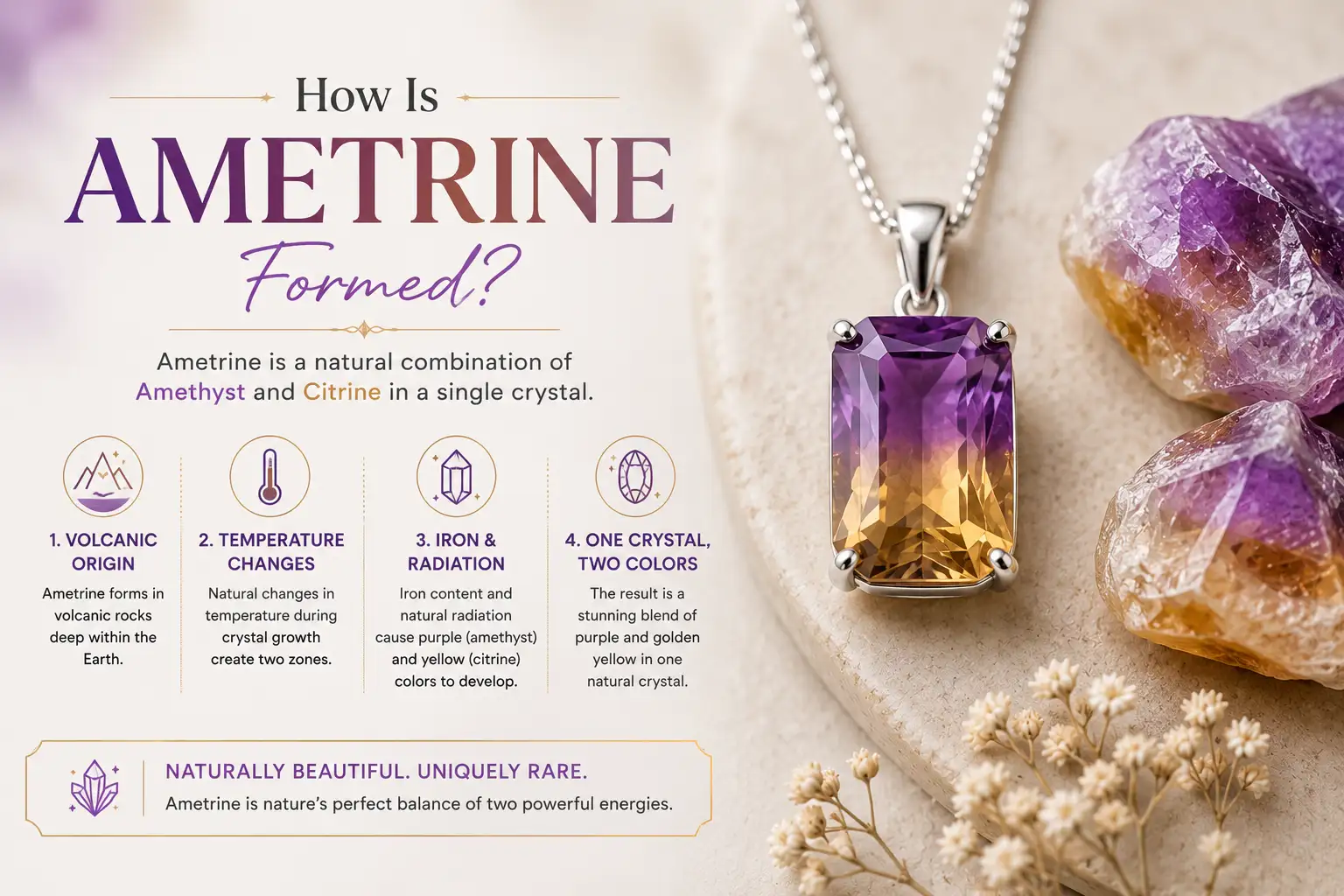
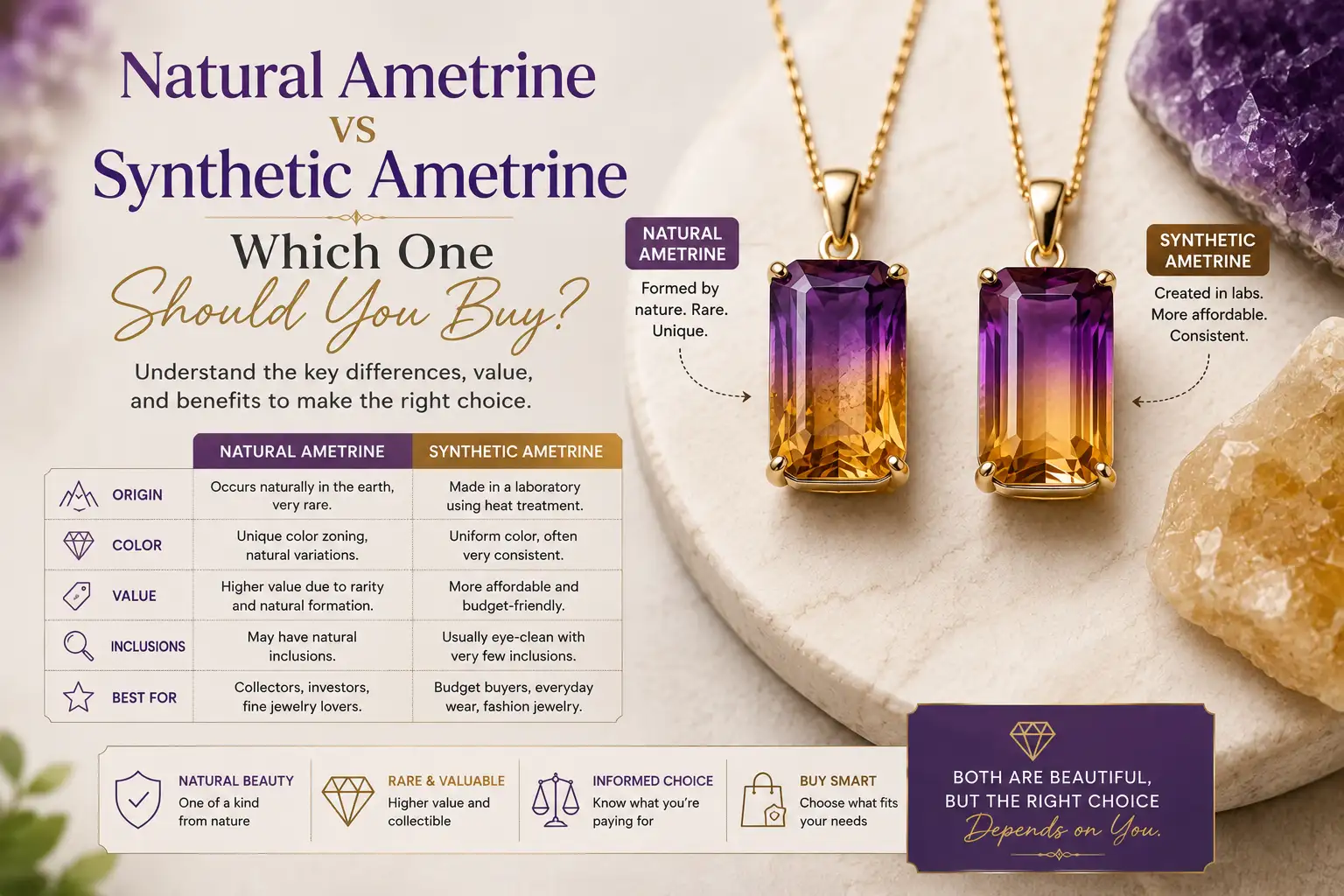
Ametrine is already a confusing stone for buyers, as one half of it looks like an amethyst and the other half looks like a citrine. The synthetic ametrine has added one more layer of confusion on top of it, now the buyers also have to know if the stone itself came from the ground or from a lab.
The natural one forms underground where the two colors grow into one quartz on their own, and nearly all of the world's supply comes from a single mine in Bolivia. The synthetic one gets grown inside a container and reaches the market at a much lower price.
Here in this blog, we will talk about how the two stand against each other, so you can pay the right price for the right stone.
So, let's get started.
The natural ametrine comes from mines like the other natural stones, and in the case of this stone, the mining happens mostly at one place. The Anahi mine in Bolivia has been supplying almost all of the natural ametrine that the market sells, and the dealers who deal in this stone plan their stock around what this one mine produces in a year.
There are some small findings reported from other countries as well, but the amounts stay too small for regular jewelry buying, so Bolivia stays the name you will keep hearing with this stone.
The synthetic ametrine gets grown inside the labs, and the process is the same hydrothermal one that the labs use for growing the synthetic amethyst. A batch takes some weeks to get ready, both of the colors come sitting in the same crystal, and the labs can keep repeating these batches through the year without waiting on any mine.
The colors inside the two stones sit differently, and this is the one difference you can try checking with your own eyes. The natural ametrine grew underground with the heat changing over time, so the border where the purple meets the yellow runs uneven in it, and the shades also keep differing from one piece to the other piece.
The synthetic ametrine comes out of controlled growing, so the border between its two colors runs cleaner, and the purple and the yellow stay almost the same across all the pieces of a batch.
Ask any dealer about the ametrine prices, and the first thing they will ask you back is which ametrine, the natural one or the lab one. The prices of the two run in different worlds.
The natural ametrine sells between 5 and 15 dollars a carat for the regular pieces. The pieces with a better color go up from there, 20 to 50 dollars a carat, and the sellers do not shy away from asking even more for the best ones.
The synthetic ametrine sells for a dollar or two a carat. That's it. The labs keep making it in bulk, so the price never gets a chance to rise.
Now, you might think a cheap stone is a good thing for a buyer. It is, till the day someone sells you that cheap stone at the natural stone price. The gap between two dollars and fifty dollars leaves a lot of room for the wrong tags, and the wrong tags are common with this stone.
So keep one habit with the ametrine. Ask the seller in plain words if the stone is natural or lab grown, and keep the bill saying whatever they answer.
Now comes the question you might be waiting to ask. If the two stones look the same, how does anyone tell them apart at all?
The answer is the gem labs. The labs put the stone under the magnification and read the inside of it. A natural ametrine grew underground over a long time, so it carries the small inclusions and the uneven growth lines inside it. A lab ametrine grew in weeks, so its inside comes out cleaner than what nature ever produces.
Now, the testing has a catch. It costs money, and the ametrine is not a costly stone in the first place. Nobody pays for a lab report on a 10-dollar stone. So the reports get made only for the bigger and the finer pieces, and the small pieces keep selling on the word of the seller.
That is why the certified pieces cost more than the uncertified ones of the same look. You are paying for the stone plus the surety, and with the fine pieces, the surety is worth paying.
Let's be honest about one thing first. No ametrine is an investment stone, not even the natural one. It is a quartz at the end of the day, and the quartz family sells in the affordable lanes.
But within its own lane, the natural stone keeps a place. A good natural piece from Bolivia finds its buyer again, the collectors take the fine ones, and a certified piece keeps its asking price steady over the years.
The synthetic piece has no second market waiting for it. You buy it, you wear it, and that is the full life of it. Nobody buys a lab quartz back, as the labs keep making the new ones for less.
So buy the synthetic one for the look and the natural one for the keeping. Just know which of the two you are paying for.
The natural ametrine and the synthetic ametrine are both real products, and both have their own buyers. The lab one fills the fashion trays at a low cost, and the natural one carries the one-mine story that the gemstone people pay for. The trouble sits only in the mixing of the two tags, and after this blog, you know how to catch that.
If you are a retailer who wants the natural side of this stone, JewelPin is a place to look. We are an RJC-certified jewelry manufacturer working with more than 150 natural gemstones, and the natural ametrine jewelry sits in that range, with the sterling silver and the gold options both. Browse the collection once, and if the pieces make sense for your store, let's talk.