7 Days Shipping in “Ship Now” Collection
WORLDWIDE SHIPPING EXCEPT INDIA
Minimum Order Value: $1000
04 August, 2026
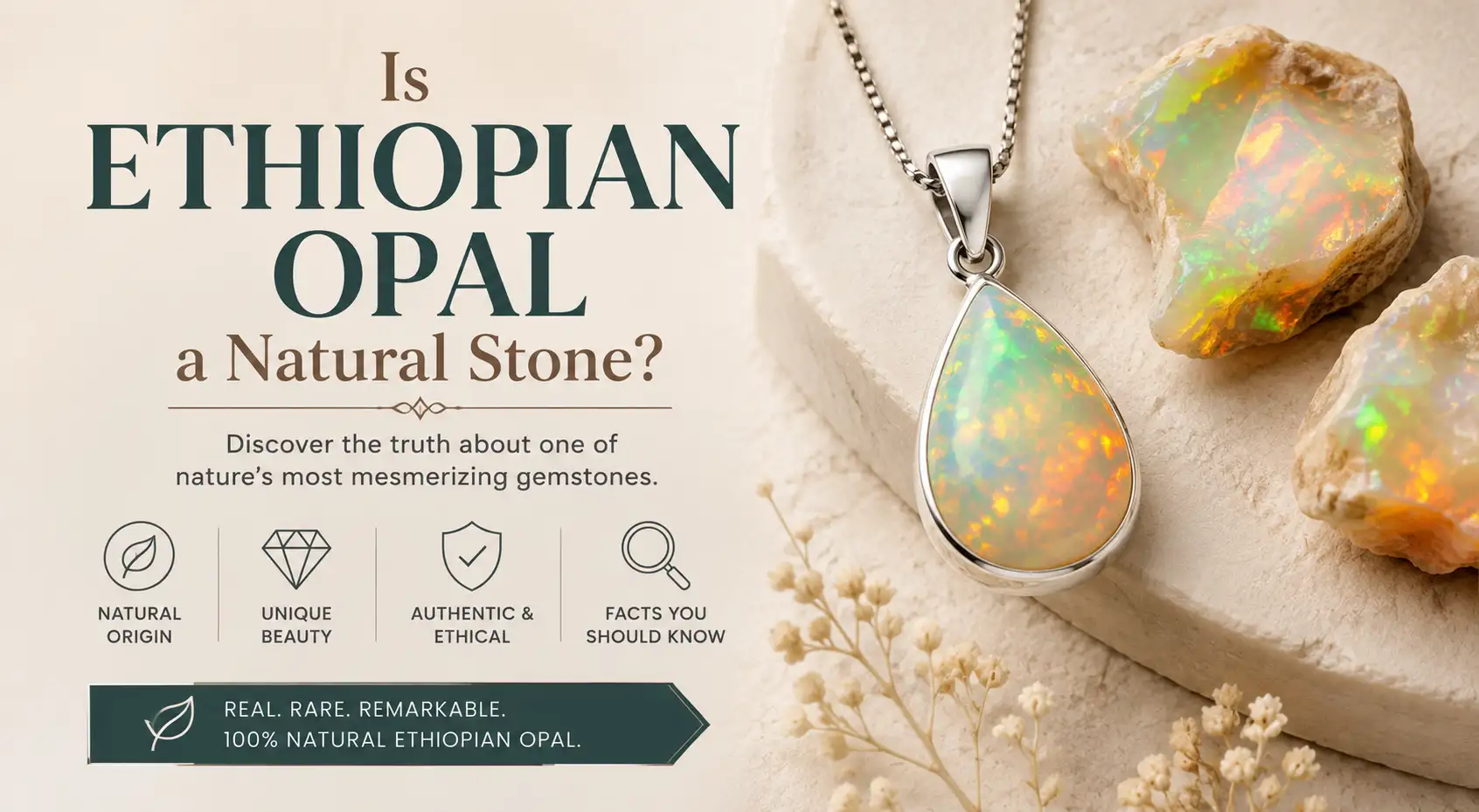
Yes, the Ethiopian opal is a natural stone. It comes from the mines in the north of Ethiopia. The ground there started giving opal in the 1990s, and the big supply the market sells today has been coming since a fresh find in 2008.
Now, you might be wondering why this question even exists when the answer is this simple. The price has a role in it, so does the way this opal behaves with the water, and the treatments done on some pieces matter too, most probably more than anything else.
Here in this blog, we will talk about why the doubt follows this stone and how you can check what you are buying, so you can settle the question for yourself.
Ethiopian opal comes from a region Wollo, in the north of Ethiopia. There is a small town in the region called Wegel Tena, and opal has been mined there since 2008.
Wollo was not the first region where Ethiopian opal was found. It was found in Shewa in 1994. However, the stone found there had brown and orange colors, and many of them cracked as they dried, so the buyers walked away.
Wollo became the first choice as it fixed both of these problems. The piece found at Wollo had white and crystal colors, and they did not crack the same way. The buyers returned, the trade named these stones Welo opal, and the name stuck.
Drop an Ethiopian opal in water and watch it. The stone will slowly drink the water, its body can turn milky or glassy, and the play of color can fade for some time. A new buyer sees this and panics, because no stone they know behaves like this.
Don't panic. This behavior has a name, hydrophane, and it comes built into the Wollo opal. The stone is porous, so it absorbs the water, and it releases the water back over the next hours or days. The color returns with the drying. Nothing gets ruined in a plain water dip.
But treat this as a care instruction. Keep the stone away from soaps, oils, and perfumes, because those can enter the pores the same way and leave their marks behind. Take the ring off before washing dishes that is the whole discipline this stone asks from you.
Now the useful part. A lab-made opal does not drink water like this. So the very behavior that scares the buyers is one of the signs that the stone in your hand came from the ground.
Ethiopian opal is sold at a much lower price than the Australian opal. The buyers see this price and start doubting whether the stone is natural or not.
The doubt is understandable, as opal has been an expensive stone for years. The Australian opal created that image, and the buyers accepted over time that a real opal cannot be cheap.
However, the low price of the Ethiopian opal has a simple reason. The Wollo region gives opal in large quantities, and the mining there is done with hand tools, which keeps the mining cost low. When a stone is found in large quantities at a low cost, its price in the market also stays low.
So the price of the Ethiopian opal only tells about its supply. It does not tell whether the stone is natural or not, and treating a cheap stone as a fake stone is where most of the buyers go wrong.
Treatment is common in the Ethiopian opal market, and it is mostly seen in the dark pieces. There is some natural black opal in Ethiopia also, but most of the black opal sold in the market gets its color from a smoke treatment.
The treatment works on the pores of the stone. The stone kept in the smoke absorbs the dark particles, and the white opal starts looking like a black opal. Some sellers use dye in place of the smoke, and the opal seen in purple or deep blue color at a low price is mostly a dyed one.
A treated opal is not a fake opal, though. The stone treated with the smoke also came from the same Wollo ground, and the treatment changed only its look. The real issue comes when the seller hides the treatment and asks the natural black opal price for a smoked piece.
So the color should be confirmed before buying an Ethiopian opal. The sellers who mention natural or treated on the bill are the ones a buyer should go with.
So, is Ethiopian opal natural? Yes. It comes out of the ground in Wollo, dug by hand, and no lab has any part in its birth. The doubts around it come from the low price, the water behavior, and the treated dark pieces, and every one of those has a plain explanation you have now read.
Buy it from a seller who answers your questions in writing. Give it the small care it asks. Do these two things, and this opal will give you a natural stone at a price no other opal ground can match.