7 Days Shipping in “Ship Now” Collection
WORLDWIDE SHIPPING EXCEPT INDIA
Minimum Order Value: $1000
02 February, 2026
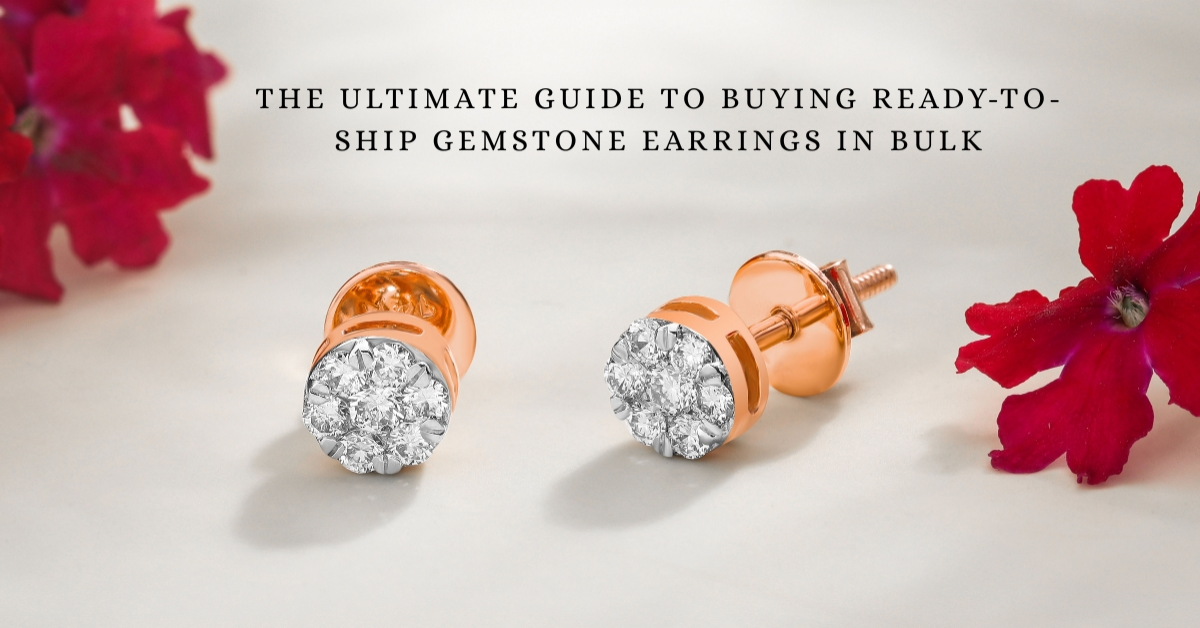
The Ultimate Guide to Buying Ready-to-Ship Gemstone Earrings in Bulk
In the jewelry retail business, an empty display case is a silent killer of profit. Custom manufacturing allows for exclusivity, but time is a big concern in this. Also, lead times of four to eight (4-8) weeks can mean missing an entire trend cycle or a holiday rush.
This is where ready-to-ship (RTS) inventory becomes your strategic asset. Additionally, buying gemstone earrings in bulk allows you to react to market demands instantly. It also helps you turn capital into inventory and back into cash with speed.
However, buying "off the rack" in the wholesale world carries its own risks. Also, how do you ensure the emerald or other jewelry quality when you can not inspect every single pair before purchase? How do you know the plating won't fade in a month?
This guide provides knowledge for retailers to navigate the bulk RTS market. It enables you to secure quality stock that sells quickly.
Understanding why you are buying RTS is as important as what you are buying. Also, ready-to-ship stock serves a specific function in your business model: agility.
Market Testing: If you want to see if your customers are interested in raw crystal earrings or a specific stone like Labradorite, RTS allows you to buy a small test batch without committing to a custom mold or high Minimum Order Quantities (MOQs).
Cash Flow Velocity: Custom orders hold your cash for months before you have a product to sell. However, RTS orders typically ship within 48-72 hours. This shorter cycle means your money is working harder and faster.
Holiday Buffer: During Q4, custom manufacturing lines get clogged. So, RTS inventory is your safety net. It allows you to restock bestsellers in mid-December when custom reorders are impossible.
When you order 100/1000 pairs of Amethyst studs, you cannot inspect each one physically before paying. Also, you must rely on a vetting process before the transaction.
Most wholesalers use master samples for their website photography. So, when you are buying bulk RTS, you can ask the supplier to send a photo of the current batch in the warehouse. Also, you should see the pile of earrings on a table under standard lighting. This reveals the true color range and consistency of the gemstones you will actually receive.
Gemstones are natural materials; variation is inevitable. However, in a bulk order, variation can quickly turn into unusable.
Color Matching: For earrings, the two stones in a pair must match. In bulk lots, check if the supplier pairs them by eye or if they just bag random stones. Also, you should ask about their tolerance policy. Will they accept returns if one Citrine is pale yellow and the other is deep amber?
Inclusions: RTS stock is often graded commercially. So, you should be clear about what grade you are buying (e.g., A, AA, AAA).
In RTS earrings, the setting is already closed. You cannot check the stone's seat. Instead, you should focus on the visible mechanics.
Earring Posts: In bulk manufacturing, the post (the part that goes through the ear) is a common failure point. You should ask about the thickness (gauge) of the posts, as standard is usually 20 or 21 gauge. In addition, anything thinner will bend easily; anything thicker may be uncomfortable for customers.
Butterfly Backs: Cheap RTS earrings often come with flimsy friction backs that loosen quickly. So, you should verify the weight and tightness of the backs.
When it comes to RTS bulk buying, not all earring styles are created equal.
Studs are the bread and butter of RTS. They have few moving parts and are less likely to be damaged in shipping.
Prong Settings: You should check the finishing of the prongs. In bulk casting, rough prongs can catch clothing.
Bezel Settings: These offer great protection for the stone but hide the pavilion. Ensure the bezel is even and does not cover too much of the gem's face.
These styles have more mechanical joints (hinges, jump rings) that can fail.
Jump Rings: In the RTS inventory, check if jump rings are soldered closed. Unsoldered rings can pull open, causing the gemstone component to fall off and get lost.
Hinges on Hoops: If you buy 50 pairs, you can expect a small percentage to have loose hinges. Factor in a 5% "defect rate" into your pricing model, or ensure your supplier has a no-questions-asked return policy for mechanical defects.
Buying RTS often means a slightly higher unit price than custom manufacturing (because the wholesaler holds the inventory cost), but you save on shipping time and opportunity cost.
You should not price your earrings based solely on the invoice price.
Landed Cost = Unit Price + Shipping + Duties/Taxes + Packaging.
RTS orders often come in bulk plastic bags to save space. So, you must factor in the cost of your own branded earring cards and boxes.
Volume Discounts: RTS suppliers often have tiered pricing. Simply put, buying 50 pairs might cost $10/unit, while 100 pairs drops it to $8/unit. So, it is essential to calculate if the extra inventory holding cost is worth the margin gain.
In the RTS market, speed should not override compliance. Also, you are legally responsible for what you sell.
You should ensure the metal (Sterling Silver, Gold) is properly stamped according to the laws of your country. Also, RTS stock imported from countries with different regulations might miss necessary stamps.
You should ask for a disclosure sheet. Are the Rubies glass-filled, or is the Turquoise stabilized? So, you can pass this information to your customer. Apart from that, selling treated stones as "natural" without disclosure is a major legal and reputational risk.
Buying ready-to-ship gemstone earrings in bulk is a crucial decision for the modern retailer. Also, it allows you to keep your shelves full, respond to trends instantly, and manage cash flow effectively. However, it shifts your responsibility of quality control from the manufacturing floor to your receiving desk.
Success lies in vetting your partner, not just the product. So, you should look for suppliers like JewelPin who provide transparency through live photos, who offer clear grading standards, and who stand behind the mechanical integrity of their pieces.
By treating RTS buying with the same rigor as our custom manufacturing, you can build a flexible, profitable inventory system that delights your customers with instant gratification and lasting