7 Days Shipping in “Ship Now” Collection
WORLDWIDE SHIPPING EXCEPT INDIA
Minimum Order Value: $1000
15 April, 2026
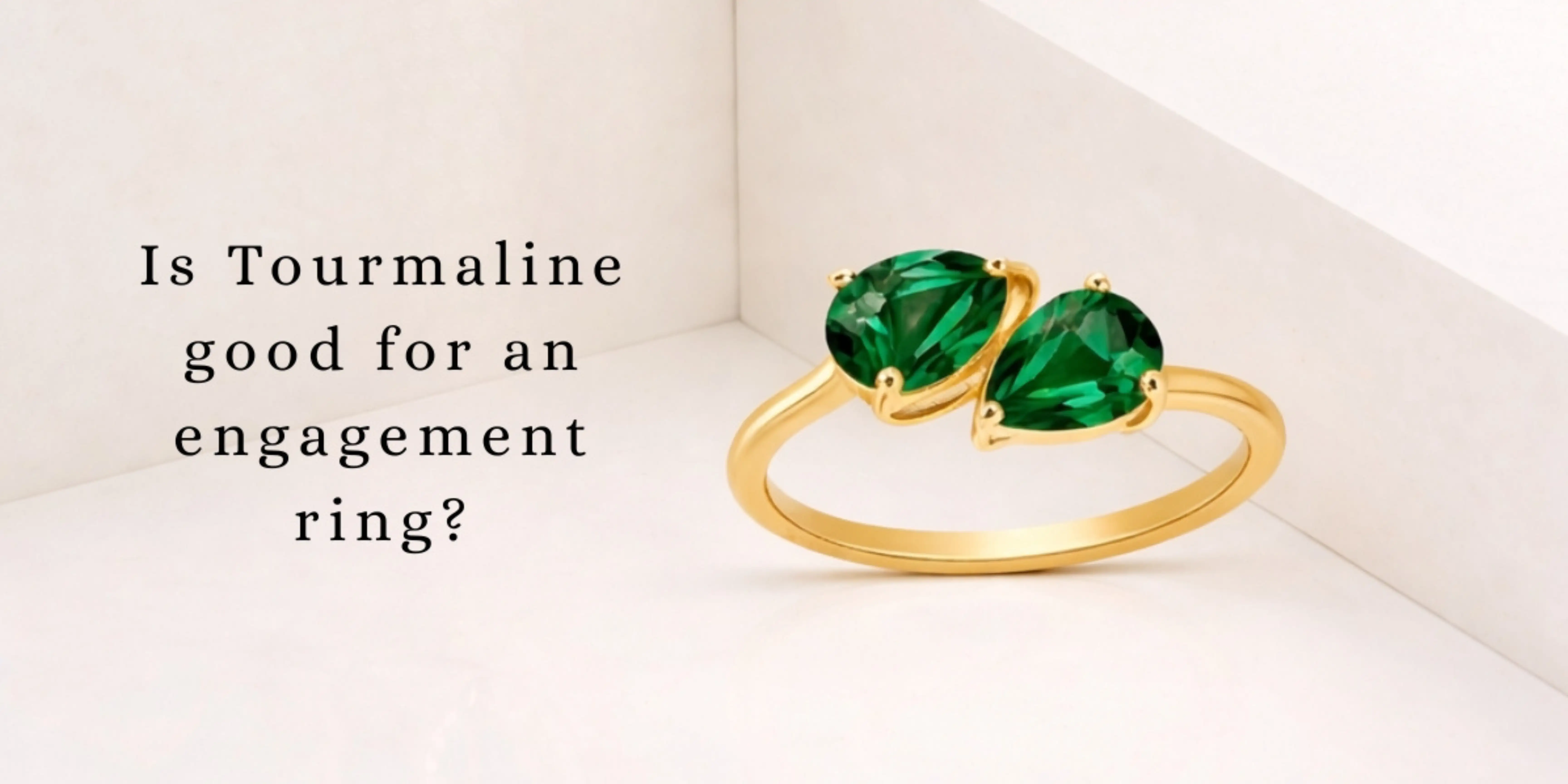
Today, couples are looking for rings that tell a story. Also, they want rings that feel personal, unique, and vibrant. In this search, Tourmaline has led the way with its color spectrum and a price point that allows for impressive carat sizes.
But an engagement ring is not just jewelry; it is a piece of wearable art that needs to survive daily life for decades. Also, it faces dishwater, doorframes, gym weights, and accidental knocks against granite countertops.
So, is Tourmaline actually good for an engagement ring? The direct answer is yes, absolutely. But only if you know exactly what you are signing up for.
Tourmaline is a stunning choice for the bride who values color over tradition, but it requires a level of care and awareness.
In this guide, we dive deep into the geology, durability, and practicality of choosing a Tourmaline engagement ring, so you can make a decision.
Before we discuss the risks, you should know why Tourmaline is a competitor to the classic sapphire or diamond.
Tourmaline is the "chameleon" of the gem world. While sapphires are famous for blue and emeralds for green, Tourmaline masters every hue. Also, you can find it in deep forest greens (Verdelite), hot pinks and ruby reds (Rubellite), and electric neon blues (Paraiba). It even displays two or three colors at once. If you have a specific shade, Tourmaline is the stone most likely to match that vision perfectly.
One of the biggest advantages of Tourmaline is its price-to-size ratio. Tourmaline is generally much more affordable than sapphire, ruby, or diamond. Additionally, this means that in the same budget, you might get a modest 0.50-carat diamond, you could likely secure a stunning, eye-clean 2.0-carat Tourmaline. If you love the look of a substantial, bold center stone, Tourmaline allows you to achieve that aesthetic without breaking the bank.
To understand if a stone can handle daily wear, jewelers use the Mohs Scale of Hardness. Also, this scale ranks minerals from 1 (talc) to 10 (diamond) based on their ability to resist scratching.
Diamond: 10 (The hardest natural material).
Sapphire/Ruby (Corundum): 9.
Tourmaline: 7 to 7.5.
On paper, a 7.5 sounds high. It is harder than steel and glass. However, the most common component of ordinary household dust is microscopic quartz, which has a hardness of 7.
This means that Tourmaline is right on the borderline. Because it is harder than dust, it won’t scratch instantly just by sitting on your hand. However, over the years of daily wear, wiping the ring on a sweater, putting your hand in a pocket, and gardening, micro-abrasions can occur.
A Tourmaline ring worn every single day for 10 years may eventually show some dulling or facet wear along the edges, whereas a diamond or sapphire would look virtually the same as the day it was bought.
Hardness is about scratching; toughness is about breaking. Tourmaline generally has fair to good toughness, but it can be breakable. Some varieties, particularly Pink Tourmaline and Red Rubellite, often form with more internal inclusions. In the gem trade, we accept these inclusions as part of the stone's character, but structurally, they can create weak points.
You should know that not all Tourmalines are equal when it comes to engagement rings. If you decided to have this gem on your finger, choosing the right variety is your first line of defense.
If Tourmaline durability is your top concern, Green Tourmaline is the safest option. Additionally, these stones typically contain fewer inclusions than the pink one. They often have no visible flaws and have better structural integrity.
At the same time, Chrome Tourmaline is a rare variety colored by chromium. Also, it offers a rich, emerald-like green that is beautiful.
Indicolite offers shades ranging from light, airy blue to ocean colors. Like green tourmaline, fine Indicolite can be found with high clarity. Also, it is an alternative to a blue sapphire.
Rubellite is the most romantic choice, but requires caution. Additionally, these are Type III gems, which means they contain inclusions. However, you can find a clean Rubellite, but it is rare and expensive. So, if you choose pink, you should inspect the stone carefully. Along with that, you should avoid stones with surface fractures, as these are vulnerable spots that could expand.
Colored by copper, Pariba Tourmaline glows with a neon turquoise light that looks like swimming pool water. Also, they are rare and can cost more per carat than diamonds. Because of their immense value and nature, a Paraiba engagement ring is a high-stakes choice that should always be protected by a secure setting and a careful wearer.
Tourmaline is not for the person who wants to put a ring on and never take it off. It is not for the person who wants to garden, rock climb, or wash dishes while wearing their fine jewelry.
Tourmaline is for:
The bride who views jewelry as art.
The couple who wants a larger, impactful stone on a budget.
Someone diligent about "last on, first off" (putting jewelry on last before leaving the house, and taking it off first thing when returning).
Someone who doesn't mind potentially polishing or replacing the stone for an anniversary 15 or 20 years down the line.
If you say "yes" to Tourmaline, adopt these habits to keep it sparkling for a lifetime:
The Gym Rule: Never wear Tourmaline to the gym. Because the metal bars and weights are harder than the stone and will scratch it instantly.
Chemical Awareness: Avoid thermal shock (sudden extreme temperature changes) and harsh chemicals. Also, you should take off your ring before cleaning the house with bleach or heavy detergents.
Ultrasonic Cleaners: Never put a Tourmaline ring in an ultrasonic cleaner (the vibrating water machines jewelers use). The vibrations can worsen existing inclusions or cause the stone to crack. Instead, you should stick to warm water, mild dish soap, and a soft baby toothbrush.
Annual Check-ups: You should take your ring to a professional jeweler once a year. They can check if the stone has loosened and give it a professional polish to remove any minor surface abrasions, making it look brand new again.
So, is Tourmaline good for an engagement ring? Yes, it is a spectacular, vibrant, and budget-friendly choice that allows for incredible personal expression. It offers a visual impact that few other gemstones can match. However, it is a choice that comes with a responsibility. It demands a wearer who is mindful and protective.
If you are willing to treat your ring with a little extra love, avoiding hard knocks and harsh environments, a Tourmaline engagement ring will reward you with a lifetime of unique color. It is a stone for the individualist, the romantic, and the person who is not afraid to color outside the lines of tradition. Choose a protective setting, pick a clean stone, and wear it with pride.