7 Days Shipping in “Ship Now” Collection
WORLDWIDE SHIPPING EXCEPT INDIA
Minimum Order Value: $1000
11 May, 2026
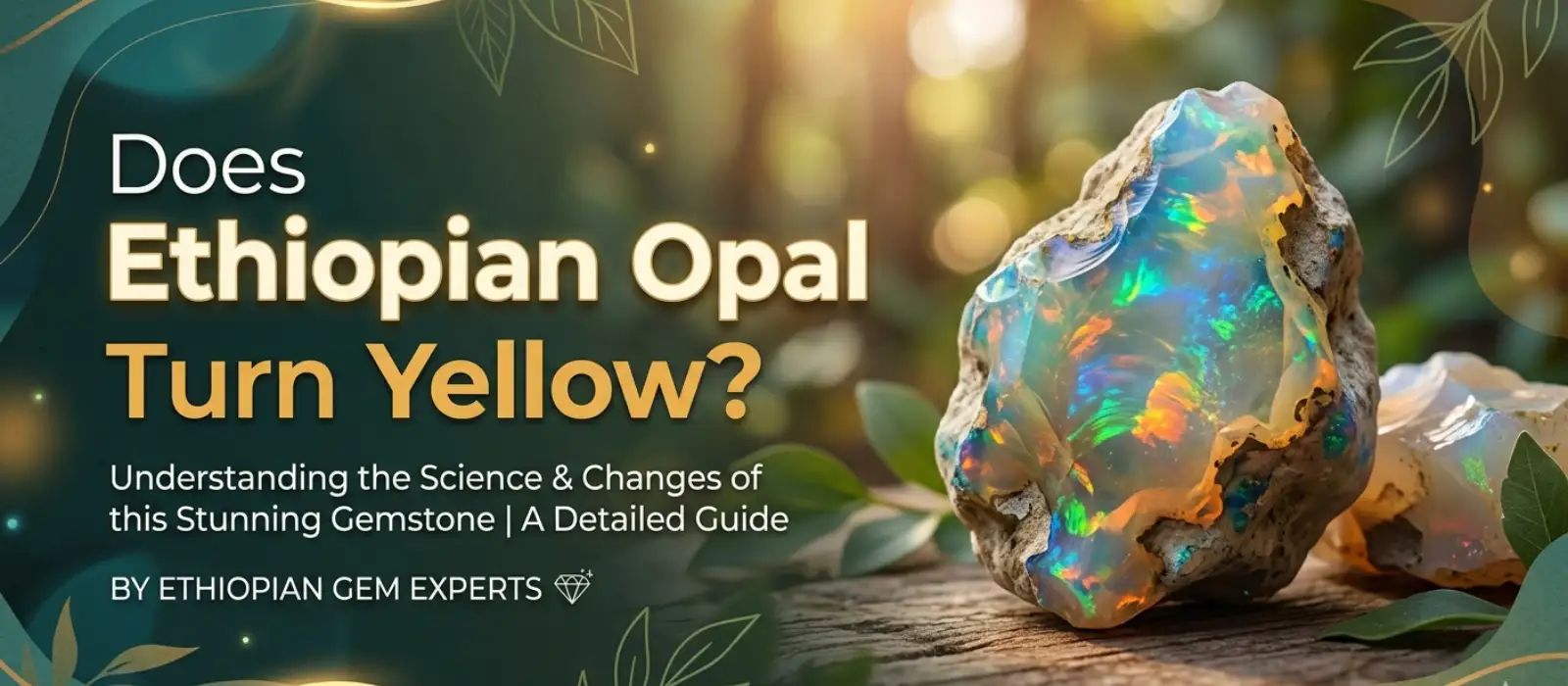
Does Ethiopian Opal Turn Yellow?
If you own a piece of Ethiopian opal jewelry or you’re thinking about buying one, ask the same question: Does Ethiopian opal turn yellow?
The simple answer is yes, it can turn yellow. But the reason and detailed explanation are more nuanced than this.
Yellowing does not happen in every stone, but when it does happen, it usually has a specific reason related to the structure of the gemstone itself. Therefore, understanding it might help you to prevent this gemstone from turning yellow.
So, let’s first begin by understanding why Ethiopian opal can turn yellow.
Let’s start with clarity. The yellowish tone of the stone is usually not a natural, permanent color change from the gemstone itself. Instead, it often occurs when the stone absorbs external materials.
The most common reason for Ethiopian opal turning yellow is oil absorption. Because hydrophane opal is absorbent, it can soak up oils from various sources, such as
Skin oils
Cosmetic products
Hand lotions
Hair oils
Jewelry cleaning oils
When opal absorbs oil, the first noticeable change is how light travels through it. As a result, the opal may start appearing yellow, brownish, or slightly cloudy.
The color change often develops slowly. The stone that once looked bright and mighty will slowly turn yellow due to oil exposure.
Water itself does not usually cause yellowing, but it can temporarily change the appearance of Ethiopian opal. As said, it absorbs the water easily, and when they do, the stone may:
Lose its play-of-color temporarily
Become translucent or muddy
Change tone slightly
Let’s have a simple understanding of it. Water often evaporates, and when it does, the stone returns to its original color. However, if water contains minerals or impurities, the absorbed substances may remain in the stone, affecting its color.
Ethiopian opal is also prone to picking up small particles from the environment, such as dirt, dust, or soap particles. Over time, these particles may settle inside the microscopic pores of the gemstone. As a result, the stone may turn yellow or slightly brown.
This issue is common in jewelry pieces that are worn daily, such as rings and bracelets.
Not always. In most cases, the yellow color is caused by water absorption, so keep the opal in a dry environment away from sunlight and heat, allowing the moisture to evaporate naturally.
When water is absorbed, the stone will get back to its original color. The process may take from a few hours to a couple of days, depending on how saturated it becomes.
However, if the yellow color is due to oil absorption, then you might have to call for professional cleaning to restore the original color of the opal. Professional cleaning might not be a guarantee to restore the original color if the stone has absorbed oils deeply for a long period of time.
The best practice to ensure that Ethiopian opal doesn’t turn yellow is prevention.
Yes, Ethiopian opal can also turn yellow naturally; however, this is a completely different situation.
Some Ethiopian opals naturally have a honey-yellow or golden body tone. This coloration comes from the gemstone itself rather than external substances. So, if you are buying such a gemstone, then the yellow color is:
Uniformly distributed
Part of the natural crystal structure
Visible from the time the gem is cut
Put simply, such opal has a yellow natural color rather than being caused by water or oil absorption.
As said earlier, the best practice to prevent Ethiopian opal from turning yellow is prevention. The prevention of the opal is a simple process:
First and foremost, prevention is to keep it away from oily materials. Therefore, if you use opal jewelry every day, then you remove it when applying lotion, sunscreen, makeup, hair oil, or any other product that may contain oil.
Oily products are one of the biggest causes of discoloration in hydrophane opals.
Keeping the opal away from water is nearly impossible if it is placed in a ring. So, the best practice would be to keep it safe from prolonged soaking in water. The occasional contact with water won’t cause any issue.
You should remove the opal jewelry before getting involved in activities such as swimming, bathing, or washing dishes.
If you have Ethiopian opal jewelry for occasional use, then it is a must to learn about the safe storage options to maintain it for a longer period.
The best storage options for Ethiopian opal jewelry are:
Soft jewelry pouch
Away from humidity
Separate from heavily oiled gemstones
Put simply, you should have a clean and dry storage box to ensure the chances of contaminants entering the stone.
No, discoloration should not stop you from buying Ethiopian opal. In other words, it is an opal that asks for awareness from its owner.
You should understand how to care for this opal to ensure it maintains its original color.
In addition, Ethiopian opals have only been commercially available since the 1990s, so it is available easily in the market.
So, does Ethiopian opal turn yellow?
Yes, it can but usually for a specific reason. The hydrophane nature of many Ethiopian opals allows them to absorb oils, moisture, or environmental particles, which can sometimes give the stone a yellowish appearance. In many cases this change is temporary or preventable.
With mindful handling, proper storage, and minimal exposure to oils, Ethiopian opals can retain their brilliant play-of-color and natural beauty for a long time.
And honestly, that shimmering dance of colors is exactly why people fall in love with these stones in the first place.