7 Days Shipping in “Ship Now” Collection
WORLDWIDE SHIPPING EXCEPT INDIA
Minimum Order Value: $1000
16 October, 2026
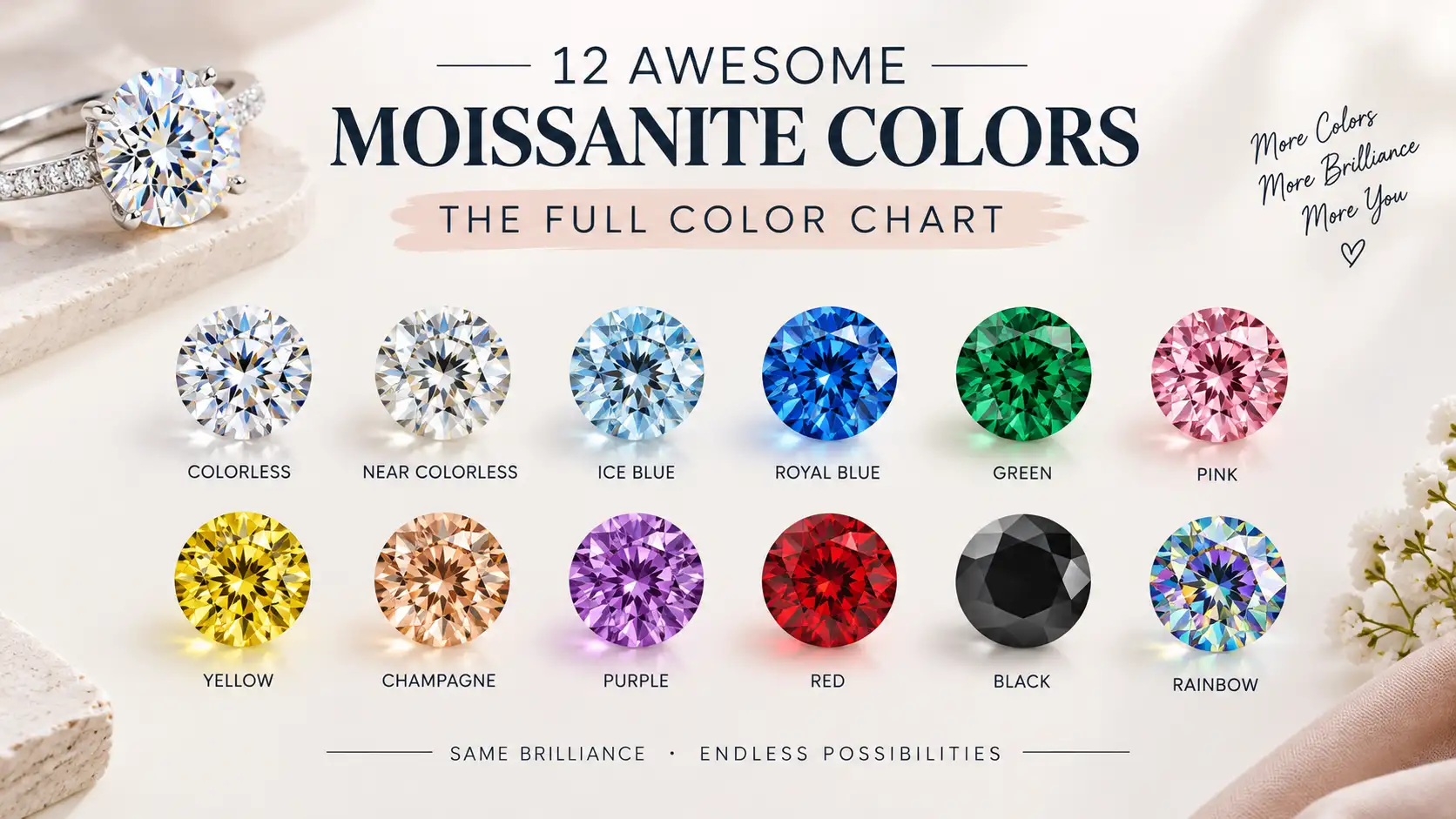
Ask most people what color moissanite is. they'll say "white like a diamond." That's true. But moissanite also comes in soft pinks, deep teals, smoky greys, honey champagnes and a black so dark looks like polished night.
not every moissanite color is made the same way. Some colors are grown into the crystal and will look exactly the same in 30 years. Others are a thin coating on the back of the stone which can scratch or wear with time. If you're buying a ring you plan to wear every day, that difference matters more than the shade you pick.
This guide walks through all 12 colors, shows you which ones are grown and which are usually coated and explains how each looks in sterling silver, white gold and yellow gold. We'll also cover what to pay and how to avoid the sellers who cut corners.
Moissanite is silicon carbide. It was first found by French chemist Henri Moissan in 1893, in fragments from the Canyon Diablo meteorite crater in Arizona. Natural moissanite is so rare that every moissanite in jewelry today is grown in a lab.
The first jewelry-grade moissanite came to market in the late 1990s. honestly early stones weren't very white. Most had a visible yellow, green or grey tint and many were graded somewhere around the K range on the diamond scale. That's where the old "moissanite looks yellowish" reputation comes from.
Growing techniques have improved a lot since then. Most moissanite sold today from good sellers looks colorless or very close to it. If you're comparing a modern stone to your aunt's moissanite ring from 2003, you're comparing two very different products.
When moissanite crystals are grown, adding tiny amounts of certain elements changes their color. Nitrogen, for example is associated with green tones and aluminum with blue. The color runs all the way through the stone. You can scratch it, polish it or run it through an ultrasonic cleaner and the color won't budge.
Some colors, especially pinks, reds, purples and bright oranges are very hard to grow consistently. So many manufacturers take a colorless stone and apply an ultra-thin colored film to the pavilion (the underside). From the top it looks like a solid pink or red stone. The coating is fairly durable in normal wear but it can be scratched by hard knocks, harsh chemicals, abrasive polishing, ultrasonic or steam cleaners and the heat of a jeweler's torch.
Coated doesn't mean fake or bad. A coated pink moissanite in a pair of earrings or a pendant can look great for years since those pieces take far less abuse than a ring.
Ask the seller directly: "Is this color grown or coated?" A trustworthy seller will give you a straight answer.
Look at the listing wording. "Enhanced," "treated," "surface-colored," or "coated" all point to a coating.
If a pink, red or purple is much cheaper than a colorless stone of the same size, it's almost certainly coated.
Under a loupe, a coated stone may show slight color unevenness or tiny scratches on the pavilion facets.
There's no independent grading system for moissanite color the way the GIA grades diamonds. Instead, sellers borrow the diamond letter scale to describe what the stone looks like.
Three things worth knowing:
Brands use their own names. You'll see "Premium," "Super Premium," "DEF," or "GHI." They're all describing ranges not lab-verified grades.
Bigger stones show more color. A faint warm tint that's invisible in a 1 carat stone can become noticeable at 3 carats. If you're going big, stick with D–F.
Metal changes what you see. Sterling silver and white gold make a stone look whiter. They also reveal any warmth. Yellow gold hides a bit of warmth which is why a G–H stone can look colorless in a yellow gold setting.
Colorless moissanite has more fire than a diamond. it throws flashes of rainbow color when it moves. Some people love that; others find it a little much in very large stones.
Shades: icy white (D–F), soft white (G–I), warm white (J–K).
Made: grown.
Best in: anything but it looks especially crisp and bright in sterling silver and white gold.
Great for: engagement rings, tennis bracelets, stud earrings and anyone who wants the diamond look without the diamond price.
It's a warm, golden-honey tone that ranges from pale sparkling-wine to rich cognac and even deep chocolate brown. Because the color is grown in, it's as tough as colorless moissanite.
Shades: pale champagne, honey, cognac, chocolate brown.
Made: grown.
Best in: yellow gold and rose gold, where the warmth really comes alive. In sterling silver, it reads more subtle and modern.
Great for: vintage and antique-inspired designs, fall weddings, and anyone who likes the look of a champagne diamond.
Tip: Champagne saturates more in larger stones. A 0.5 carat stone can look almost clear, while a 2 carat stone shows its warmth clearly.
Yellow moissanite runs from a soft lemon to a vivid canary that looks a lot like a fancy yellow diamond, just with more rainbow fire. It's cheerful without being loud.
Shades: pale lemon, canary, golden yellow.
Made: often grown; some brighter yellows are coated, so ask.
Best in: yellow gold for a rich, warm look. Sterling silver gives it a fresh, sunny contrast.
Great for: statement rings, pendants, and gifts for anyone born in November (yellow is associated with the November birthstone, citrine).
Green moissanite covers a lot of ground from a light mint to a deep saturated green that reads like emerald. It's also one of the smartest alternatives out there. Natural emeralds are soft (about 7.5–8 on the Mohs scale) and usually full of inclusions. Green moissanite is 9.25 on the
Mohs scale, clear, and made for daily wear.
Shades: mint, spring green, emerald green, forest.
Made: grown.
Best in: sterling silver and white gold for a cool, crisp look; yellow gold for a classic, vintage emerald feel.
Great for: emerald-style engagement rings, May birthday gifts and nature lovers.
Blue moissanite is the one people most often compare to sapphire. It ranges from a pale sky blue to a deep royal blue. Grown blues tend to be softer or deeper and moodier; very bright, electric blues are sometimes coated.
Shades: sky, cornflower, royal blue, navy.
Made: grown in many shades; some vivid blues are coated.
Best in: sterling silver, white gold, and platinum. The cool metal makes the blue look clean and bright.
Great for: "something blue" wedding jewelry, September birthday gifts, and anyone who wants a sapphire look with more sparkle.
Teal sits right between blue and green and most interesting color moissanite comes in. Good teal stones shift as you move them, showing more blue in one light and more green in another. Aqua is its lighter, beachier cousin.
Shades: light aqua, sea-glass, peacock teal, deep blue-green.
Made: grown.
Best in: sterling silver and white gold. Yellow gold pulls out the green side of the stone.
Great for: people who want color that isn't a "standard" birthstone shade, ocean-inspired pieces, and unique engagement rings.
Grey moissanite is the favorite of people who don't usually wear sparkly jewelry. It ranges from a silvery grey to a darker smoky tone, and some stones show a blue-grey shimmer in daylight. It looks calm and expensive without shouting.
Shades: silver-grey, smoky grey, charcoal, blue-grey.
Made: grown.
Best in: sterling silver, white gold, or black rhodium for a sleek monochrome look. Rose gold can clash with cooler greys.
Great for: minimalist engagement rings, alternative brides, and men's rings.
Black moissanite is grown with a heavy concentration of color-causing elements, which makes it very dark or nearly opaque. Because it's so dark, you won't see the white sparkle of colorless moissanite. What you get instead is a glossy, mirror-like surface with sharp reflections.
Some stones labeled "black" are actually very dark green and show green flashes under strong light. Some lower-priced black stones are coated, so it's worth asking.
Shades: jet black, black-green.
Made: mostly grown; some are coated.
Best in: sterling silver and black rhodium for an edgy look; yellow gold for high contrast.
Great for: men's rings and chains, gothic or alternative styles, and eternity bands.
Pink is the most searched moissanite colors in the U.S.. It covers everything from a barely-there blush to a bright bubblegum and a deep rose. Most pink moissanite on the market is coated, so it's usually less expensive than you'd expect.
Shades: blush, soft rose, bubblegum, hot pink.
Made: usually coated.
Best in: rose gold for a romantic, all-pink look. Sterling silver keeps it fresh and modern and makes the pink pop.
Great for: earrings, pendants, and fashion rings; gifts for Valentine's Day, anniversaries, or October birthdays (pink is linked to the October birthstone, pink tourmaline).
Tip: If you want pink for an everyday engagement ring, ask whether the stone is grown or coated and plan on gentle care.
Purple moissanite ranges from soft lavender to a deeper violet. The lighter lavender shades have become especially popular for engagement rings that feel soft and romantic without being pink.
Shades: lavender, lilac, violet, plum.
Made: usually coated.
Best in: sterling silver and white gold for a cool lavender; rose gold for a warmer, dreamier look.
Great for: February birthday gifts (amethyst color), fashion rings and anyone who likes something just a bit different.
Red moissanite gives you a ruby-like look with far more fire than a real ruby. It ranges from bright cherry red to deep wine. Red is almost always coated because a true red is very difficult to grow in moissanite.
Shades: cherry, ruby red, garnet, wine.
Made: usually coated.
Best in: yellow gold for a classic, rich look; sterling silver for a modern contrast.
Great for: Valentine's Day and anniversary gifts, July birthday pieces (ruby red), and statement cocktail rings.
It covers peach and apricot shades up to a bold tangerine and warm amber. Softer peach tones can look similar to padparadscha sapphire.
Shades: peach, apricot, tangerine, amber.
Made: usually coated.
Best in: yellow gold and rose gold.
Great for: fall-themed jewelry, November birthday gifts, and people who want color no one else will have.
Metal changes a stone's color more than most people expect. Here's a quick guide.
Sterling silver is 92.5% silver and it has a clean, bright white color that makes cool-toned stones like blue, teal, grey and colorless moissanite look their best. It's also far more affordable than gold which means you can put your budget toward a bigger or better stone.
A few things to keep in mind:
Rhodium plating gives sterling silver extra shine and slows tarnishing. Most good silver moissanite jewelry is rhodium-plated.
Check the prongs. Silver is softer than gold so prongs should be solid and well-shaped. Have a jeweler check them once a year if you wear the piece every day.
Tarnish is normal and easy to fix. A silver polishing cloth takes care of it in seconds.
Daylight shows the truest color. Warm indoor lights (most homes and restaurants) make blue, teal and grey stones look deeper and less saturated and make champagne, yellow and orange stones look warmer and richer. Bright store lights or LEDs make all moissanite sparkle harder and cool-toned colors look brighter. Blue, teal and grey are the most "chameleon" colors. Before you buy, ask the seller for a video in both daylight and indoor light.
For an engagement ring pick a grown color like colorless, champagne, green, blue, teal, grey, or black. They're as durable as white moissanite and need no special care. For a gift think about what she already wears. If her jewelry is mostly silver, go for colorless, blue, teal, pink, or purple. If it's mostly gold, champagne, yellow, red, or orange will fit right in. For men's jewelry black, grey, blue and colorless are the most popular in sterling silver rings, chains and studs. For skin tone there's no hard rule but cooler skin tones often look great with blue, purple, grey and silver settings. Warmer skin tones often shine with champagne, orange, red and gold settings.
Prices vary widely between sellers, but here's the general pattern:
Coated colors (pink, red, purple, orange) are sometimes cheaper than colorless.
Colorless and champagne sit in the middle.
Grown blue, teal, green and grey usually cost more because they're harder to grow in consistent, attractive shades.
Colored moissanite is popular which also makes it popular with sellers who cut corners. Watch for these red flags:
"Moissanite diamond." Moissanite is not a diamond. Under the Federal Trade Commission's jewelry guides, sellers shouldn't call a non-diamond stone a "diamond" without clear qualification. Reputable U.S. sellers call it moissanite.
No answer on coated vs. grown. If they can't or won't tell you, move on.
Too-good-to-be-true pricing. "Certified 2 carat moissanite ring, $19.99" usually means low-quality stones, plated base metal, or a store that disappears after you pay.
Certificates without context. Many moissanite listings include a GRA certificate. These are useful as a record of your stone's size and description but they aren't independent lab reports like a GIA diamond report.
No real business details. Look for a real address, a clear return policy and a warranty.
Colorless (white) moissanite is by far the most popular especially for engagement rings. Among fancy colors, pink, champagne, blue and grey tend to be the most sought after in the U.S.
Lighter colors like champagne, aqua and soft pink still show strong sparkle and rainbow fire. Deeper colors show less, because more light is absorbed by the stone's body color. Black moissanite has almost no fire but a strong, glossy shine.
Grown colors won't fade or change. Coated colors don't fade, but the coating can be scratched or damaged by rough wear, heat or harsh cleaning which can leave lighter patches.
For daily wear, colorless, champagne, green, blue, teal, grey and black are all excellent because the color is grown into the stone. Pink, red, purple, and orange can work too but ask whether the stone is coated and plan on gentler care.
Yes, pink moissanite is real moissanite. In most cases, the pink color comes from a coating on the underside of a colorless stone rather than from the crystal itself.
Most black moissanite is grown with a high concentration of color-causing elements, which makes it very dark. Some lower-priced black stones are coated. Ask your seller.
Round, oval, pear, emerald, cushion and radiant cuts are widely available in most colors. Rare colors and unusual shapes may be special-order only.
Absolutely. Sterling silver is a great match for cool colors like blue, teal, grey, black and colorless and it makes pink and purple look bright and fresh. Look for rhodium-plated silver with solid prongs.
The best moissanite color is the one you'll keep looking at. If you want a ring that lasts a lifetime of daily wear, start with a grown color like colorless, champagne, green, blue, teal, grey, or black. If your heart's set on pink, red, purple, or orange, go for it, just choose a piece and care routine that respects the coating. Whatever you choose, sterling silver is an easy, affordable way to wear it and it makes cool-toned colors look their best.