7 Days Shipping in “Ship Now” Collection
WORLDWIDE SHIPPING EXCEPT INDIA
Minimum Order Value: $1000
25 May, 2026
Comparing White Zircon vs Cubic Zirconia: What's the Difference?
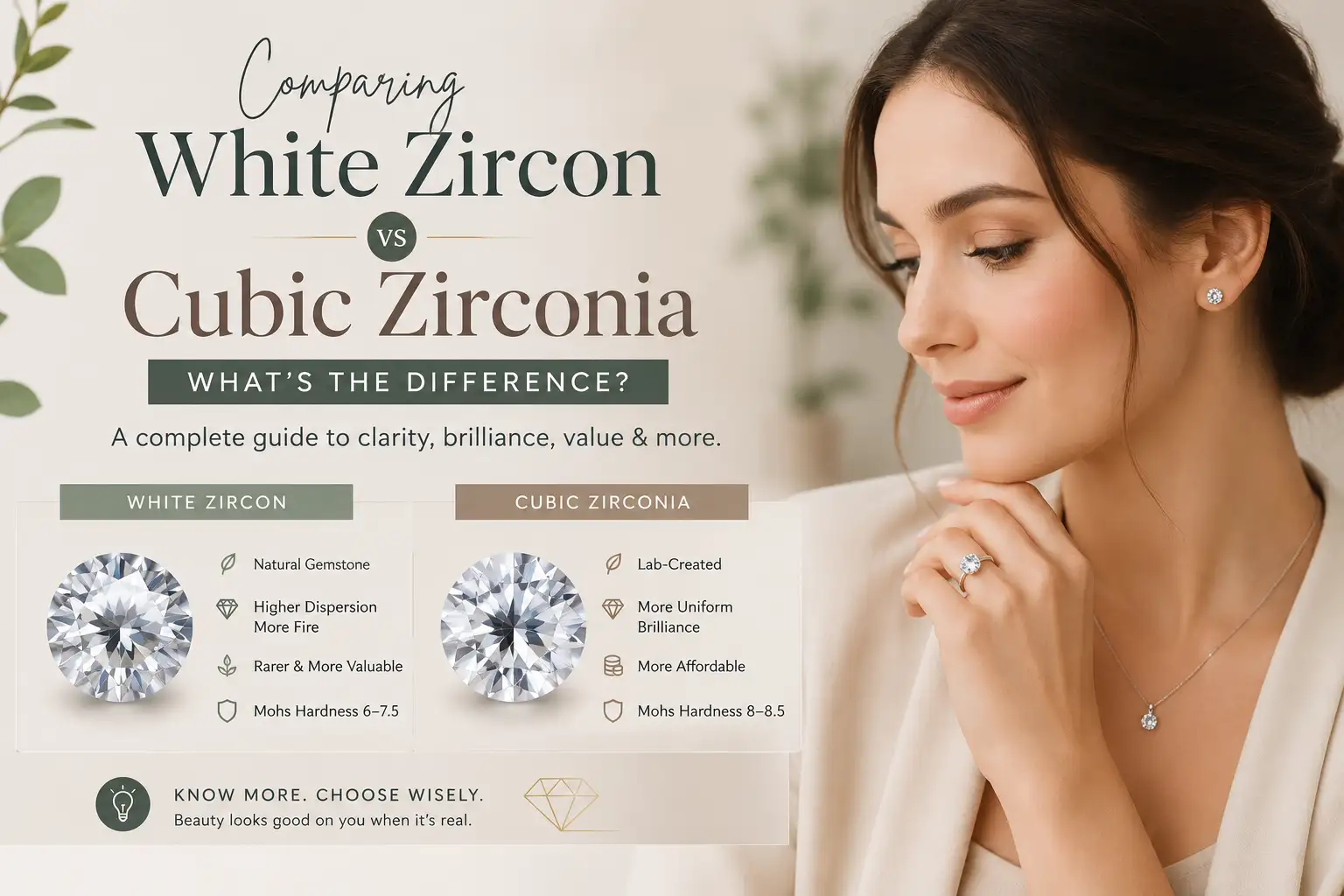
This blog has a side-by-side comparison of white zircon and cubic zirconia. The comparison exists because both names sound almost the same, and that confusion alone makes people think they are the same stone. But they are not.
White zircon is a natural gemstone that comes from the earth. Cubic zirconia is completely lab made. If you ask me, I think this name confusion is the reason many retailers lose sales without even realizing it. A customer walks in, sees white zircon, and most probably thinks it's that cheap stone they have read about somewhere online.
At JewelPin, we have worked on both stones long enough to know where each one stands and where each one falls short. So, you can expect the differences shared here to come from hands-on experience rather than second hand knowledge. So, let's get into it.
This is the difference, I think, that changes the whole conversation.
White zircon comes from the earth. It's a natural stone. Mined, cut, and then set into jewelry. Cubic zirconia, on the other hand, is made in a lab to look similar to a diamond. Two very different origins.
Now, you might ask me does it even matter where the stone comes from if both look good. I would say it does. And let me tell you why.
At JewelPin, we have experienced firsthand that customers often ask one question before buying. Is this real or not. That one question decides the sale most of the time. People want to feel like what they are wearing came from nature, not from some machine sitting in a factory.
So, if your customers also ask this question, and they most probably do, then give them the one that actually comes from nature. That alone changes how they feel about the purchase.
This is the difference I have to be upfront with you about. Cubic zirconia doesn't age well. Indeed, it looks great on day one, yeah, no doubt about that. But give it a few months of daily wear and you will start seeing it go cloudy. The surface picks up scratches, the shine fades, and it starts looking like something you didn't pay for.
Now, I have seen white zircon holding up to daily use better than cubic zirconia. You might ask me, why do I think that my thoughts matter here. There should be a claim to prove it. I would say, yes, my thoughts alone don't matter, but scientific data does.
White zircon scores between 6 and 7.5 on the Mohs scale. Let me tell you something that will surprise you. Cubic zirconia is around 8 to 8.5. Now you might say I am wrong here, according to Mohs scale, cubic zirconia should be the stronger one. But here is the twist.
Cubic zirconia is more prone to surface scratches that kill its shine faster than anything. White zircon, as I have said, is harder to scratch in that way. So, the shine stays longer. Here is the proof that my thoughts do matter.
If you ask me, this is where most people get confused. Both stones are cheap compared to a diamond. So, people assume they sit in the same category. But the gap between them is still there.
Cubic zirconia is dirt cheap. You can get it for almost nothing. That's because it's lab made. No mining cost, no rarity, nothing behind it. White zircon costs more. Not a lot more, but enough to notice when you are buying in bulk for your store.
Now, you might ask me is white zircon worth paying more for. I would say, look at it this way. Cubic zirconia gives you a stone that looks great for a few months and then starts losing its charm. White zircon gives you a natural stone that lasts longer and carries the "natural gemstone" tag that your customers actually care about.
At Jewelpin, we have retailers who switched from cubic zirconia to white zircon in their collections. The reason they gave us, customers stopped complaining about stones going dull after a few months. So, you pay a little more, but you get fewer returns and happier customers. That trade makes sense to most retailers.
Honestly, this is a difference that is very hard for customers to detect on their own. Both stones indeed do a good job when it comes to sparkle. But as I have said many times, at JewelPin, we believe in being honest. So, for us, this difference does exist and we think you should know about it.
Cubic zirconia throws rainbow flashes. A lot of them. Now you might think that's a good thing. I would say, it depends. Too much rainbow actually makes it look fake to a trained eye. It's like the stone is trying too hard to impress.
White zircon, on the other hand, gives you a sparkle that is closer to how a diamond behaves under light. More white light coming back at you, less rainbow drama. We placed both stones next to each other once at Jewelpin, and blah, the difference in how they handle light was hard to miss.
Let me tell you why this matters. White zircon has a different kind of depth to its sparkle that cubic zirconia simply doesn't have. Your regular customers most probably won't catch this difference. But being upfront about it is what builds trust. And trust is what brings customers back.
If you ask me, this is the difference that has nothing to do with how the stone looks. It's about what happens in the customer's head after they hear the name.
Tell someone they are wearing cubic zirconia. If they are the kind of person who thinks lab made means cheap, you will have lost their interest right there. Doesn't matter how good it looks on their hand.
Now, let me put you in another situation. You have a customer wearing white zircon, not knowing what it is. The moment you tell them it's a natural gemstone, something changes. The way they look at it changes. The value of that stone in their head goes up.
You might ask me, does a name really matter that much. I would say, it shouldn't. But it does. People buy stories as much as they buy stones.
Cubic zirconia has no story. It came from a factory. White zircon came from the earth. That story alone gives your customer a reason to feel good about what they bought. Here is the proof that perception matters more than people like to admit.
Look, cubic zirconia is not a bad stone. Nobody should call it one. But when you compare it with white zircon, the differences start adding up. One comes from the earth, the other from a factory. One holds its shine, the other most probably won't after a few months. At Jewelpin, we have worked with both long enough to say white zircon gives you more to work with if you are a retailer. So, if anything in this blog made sense to you, don't just sit on it. Give white zircon a try once. Let your own experience be the proof.