7 Days Shipping in “Ship Now” Collection
WORLDWIDE SHIPPING EXCEPT INDIA
Minimum Order Value: $1000
26 February, 2026
The beautiful gems worldwide that have one greatest shining and brilliance is the Ruby. Ruby is beyond an ordinary stone; it is a token of love, vigor, and culture.
Ruby derived from the Latin word "ruber" which means red. It is suitably named for its enrapturing blood-red shade. Representing passion, energy, and vitality. Ruby has enchanted human civilization for quite a long time with its red fiery splendor.
Ruby always has a mystery to tell with quite intriguing characteristics. Nature is an amazing thing, and this has been testified by the fact that chromium, the same element that makes Ruby red, is indeed the charm that transmutes a gemstone into a symbol of love and passion.
Ruby is famous for its remarkable hardness, ranking second to diamond on the Mohs scale. This makes it a stunning and durable choice for ruby jewelry capable of withstanding the test of time.
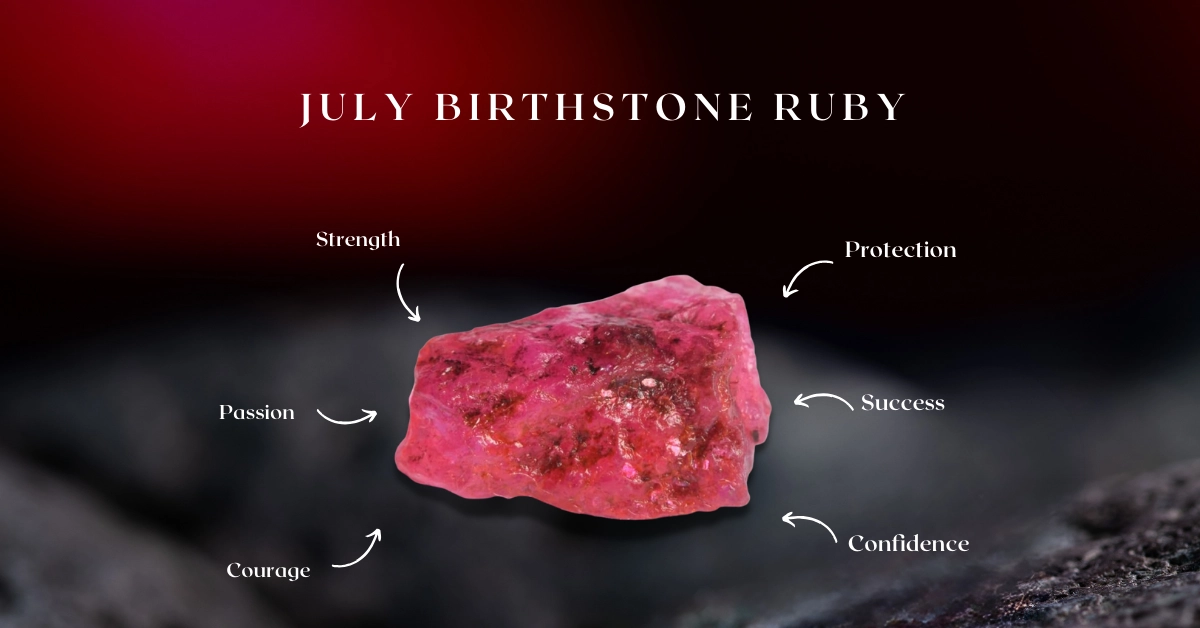
Ruby holds an exceptional place in the domain of birthstone jewelry, being chosen for July. As per the birthstone graph, Ruby is accepted to give wellbeing, wealth, and wisdom to those brought into the world this month. Filling in as an encouraging sign and positive energy throughout their lives.
According to the birthstone chart, Ruby is the stone of the month of July. Thought to confer health, prosperity, and knowledge. These precious gemstones were not only valuable in noble circles but they also had military significance. Burmese warriors who owned rubies believed that wearing them would bring invincibility in battle.
In the Sanskrit language, Ruby is known as Ratnaraj, which translates to the king of gemstones. The largest ruby in the world, weighing 40,920 carats, is currently owned by a Chinese jewelry company. Throughout history, notable rubies such as the 'Edwardes Ruby,' 'Timur Ruby,' 'De Long Star Ruby,' 'Black Prince's Ruby,' and 'Rosser Reeves Star Ruby' have gained great fame. The formation of this birthstone for July dates back over 50 million years. Occurring deep beneath the Earth's crust through immense pressure and the presence of specific minerals.
Ruby's significance is not limited to its beauty. It is symbolically rich across cultures. Ruby is perched in Chinese culture as the stone of wealth and luck, considered to bring cash and success to the wearer.
Rubie is a precious Gemstone that has been cherished and celebrated in numerous mythologies throughout history. Possessing a ruby was regarded to give protection and safety to the wearer in ancient Hindu culture. It was even claimed that sacrificing rubies to the gods could result in rebirth as an emperor.
Burmese soldiers believed that rubies conferred invincibility as they embedded these priceless gemstones into their bodies before entering battle.
Achametis's eighth-century Arabic work explores the symbolism of dreams with rubies. Dreaming of rubies was considered a favorable sign by Achametis, foretelling great joy and fortune in the dreamer's future.
Rubies were also prized by Chinese noblemen. According to legend, they would bury rubies beneath the foundations of their structures in order to invoke good fortune and assure profitable commercial activities.
Rubies are rare gemstones that undergo a natural formation process within the Earth. The exquisite red coloration of rubies arises from the red variant of the mineral corundum. Mineral Corundum is subjected to high temperatures and intense pressure beneath the Earth's surface. The crucial factor behind the iconic red hue of rubies is the presence of chromium. The formation of rubies can be impeded if silica or iron is present. This obstacle, coupled with the inherent scarcity of corundum, contributes to the exceptional rarity of rubies. These captivating gemstones have been raised by the intricate interplay between geographical factors.
The aesthetics and symbols of a Ruby provide numerous benefits for their wearer. In the world of crystal healing, Ruby is worshipped to enhance the heart chakra to love, compassion, and emotional health.
Rubies are said to boost energy levels and stimulate the body's life force. They are thought to enhance passion, courage, and motivation while eliminating negativity and encouraging positivity.
Blood circulation: Rubies are thought to boost blood circulation and energy.
Protection: They are thought to protect the wearer from injury and negative energy by functioning as a shield.
Rubies are thought to strengthen the heart, balance emotions, and promote emotional recovery.
Grounding and stability: They are said to give the wearer stability, balance, and grounding energy.
Ruby is said to upgrade one's creativity and energy for life. It also lights a spark of motivation that fills creative expression and self-awareness. Whether worn as a fashion statement or a symbol of personal strength, July birthstone Ruby jewelry is a radiant reminder to embrace the fire within and live purposefully and passionately.
Avoid strong chemicals: Avoid using harsh chemicals on your ruby jewelry, such as home cleansers and cosmetics as they might dull or damage the gemstone.
Clean your ruby jewelry on a regular basis with a mild soap and warm water solution. Scrub gently with a gentle brush, then rinse and pat dry.
Keep your ruby jewelry separate in a soft pouch or jewelry box to avoid scratches and tangling.
Professional cleaning: Cleaned and inspected professionally your ruby jewelry on a regular basis to keep its luster and ensure the settings are safe.
Indulge in JewelPin's magnificent ruby jewelry collection, where you can find the perfect item to complement your style for any occasion. Explore our beautiful collection of wholesale gold and 925 sterling silver ruby jewelry. JewelPin is the top gold and silver ruby jewelry manufacturers, wholesalers and suppliers in the USA. JewelPin creates jewelry pieces wholeheartedly that celebrate the uniqueness of people born in the month of July and offers heirloom pieces that can be treasured for generations.
Ruby stands out for its vivid red hue, symbolizing passion and vitality. This makes it a timeless choice for jewelry that increases elegance and significance.
Ruby's remarkable hardness makes it vital for day-to-day wear.
Ruby holds significant symbolism across different societies, representing power, success, and protection throughout history.
Ruby is believed to stimulate the heart chakra, promoting emotional well-being, vitality, and imagination.
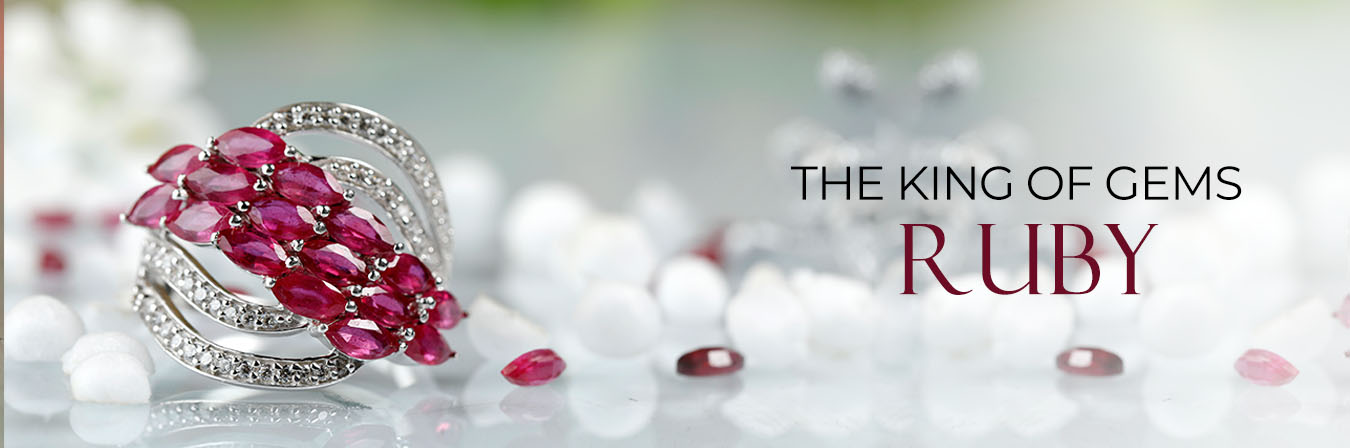
Ruby, it is a gemstone that is a complete stunner, very charming, rather romantic and the epitome of finesse and quality. It belongs to the corundum family of gemstone with a hardness factor of 9 on Moh’s scale. Thus, rubies are inadvertently the hardest of the gems after diamonds. Elements like chromium present in rubies lend them their colour, which can fall anywhere between light red to deep purplish red. The stronger the presence of chromium in a ruby, the deeper is its colour. People often consider rubies to be symbolic of love and passion, owing to its red colour. World’s most exquisite rubies are often found in Myanmar.
Rubies are the most preeminent and fine gemstones in the world of jewelry. In Sanskrit, it is termed as ‘Ratnaraj’ or the King of Gems due to its sophisticated luster, deeply alluring colour and a stunning gleam. Rubies look stellar in all settings- gold, silver or rose gold. So, this is your complete guide to buy, protect and cherish your rubies.
The word ‘Ruby’ comes from the Latin term ‘ruber’, implying red. The foremost mentions of rubies have been found in the ancient texts of the Holy bible and Sanskrit manuscripts. Over the years, these resplendent gems have been linked with myriads of legends. In Myanmar, the soldiers believed that permeating rubies into their skin would make them undefeatable. In India, donating a Ruby is associated with honouring Lord Krishna. Rubies were believed to be prized possessions in other parts of Asia as well. If history is to be believed, rubies were traded through the Chinese Silk Road in 200 B.C.
Ruby (Manikya) is a very rare and a widely appreciated gemstone. It displays immaculate balance between colour saturation and consistency with negligible contamination. Worldwide gemstone markets usually adhere to globally accepted standards to evaluate the quality of rubies which can aid in helping customers to determine their worth.
Colour: The hue of ruby is its most essential discerning characteristic. Minor alterations in colour can lead to huge differences. The finest colour is one which is pure, vibrant red with a tinge of blue. As the colour moves down to orange or purple, its quality is believed to deteriorate.
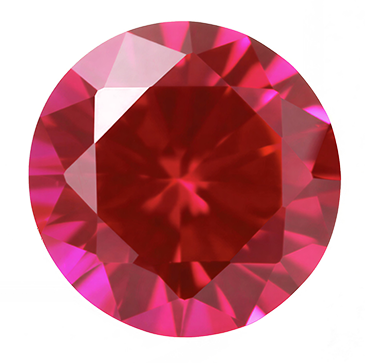
Cut: The ruby crystal’s shape determines its suitability for certain cuts. The most common and regular shape a Ruby is found in is a flat tabular hexagonal shape. Usually, they are cut in cushion or oval shapes, with excellent-cut crowns and step-cut pavilions. Triangular, round, pear shaped and marquise shaped rubies are also found but, are somewhat rare in bigger sizes.
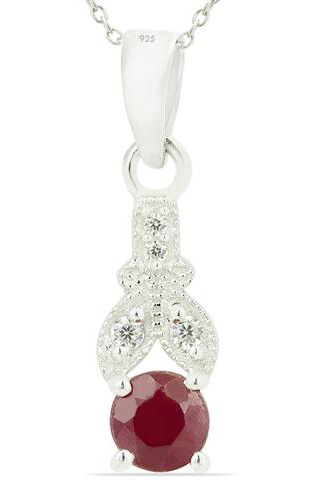
Size: - The per-carat price of the Ruby increases dramatically as its size enlarges. Fine-quality natural rubies are found rarely thus, are more expensive. Commercial-quality rubies are readily available in an array of sizes.
Clarity: There is no such thing as rubies with no inclusions. Their value is directly related to the visibility of these inclusions. Most inclusions that reduce its transparency or brightness lower the value of the stone. Rubies usually entail mineral inclusions called needles.
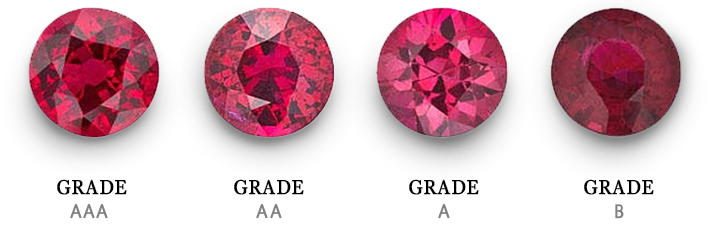
All these factors transcend into certain quality grades. Though not globally adhered to, these grades are the only standardization available when buying rubies or ruby jewelry.
Grade AAA -It represents just the 1% of all natural gemstones. Any ruby in this spectrum is super fine, rare and precious.
Grade AA - This grade incorporates 10% of all natural gemstones available in the world. All rubies that fall under this rank are superior in quality and are used to make fine jewelry.
Grade A - This includes 20% of the world’s naturally occurring gemstones. It isn’t as admirable as the AA grade but, is still considered alluring and fit to be used in fine jewelry.
Grade B - This grade account for over 50% of natural gemstones.
Today, the majority of rubies are heat-treated to elevate their appearance. The resulting stones are very stable and fine in colour. Quite a lot of rubies are also heated in flux to mend their fractures. With rubies that are relatively smaller in size, the heat treated ones amount the same as the untreated ones of the same quality. However, with exceptional quality rubies, the untreated stones garner a premium that is sometimes 50% or more when compared with treated stones of the same mark.
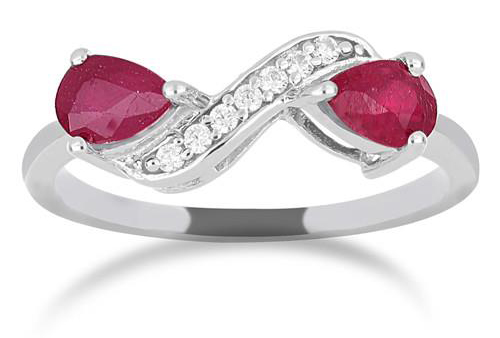
Rubies are susceptible to chipping or cracking, especially when set in rings and bracelets. Foreign particles often accumulate on its surface, making it dull and lose its luster over time. Here are some tips to keep your rubies safe and gleaming:
1. Keep them clean-- Delicately clean your rubies with soft-bristled toothbrush and smild soap water. Immediately rinse off with warm water and wipe clean with a lint-free cloth.
2. Just look, don’t touchAbstain from touching your Rubies too often. Keep them miles away from dust. Oil and grease and touch them only when it is absolutely unavoidable.
3. Be assiduous while wearing them-Make it a point to don on your jewelry only after you have finished getting ready. After wearing your jewelry, mildly wipe of any excessive oil on your skin and make-up using a very soft cloth.