7 Days Shipping in “Ship Now” Collection
WORLDWIDE SHIPPING EXCEPT INDIA
Minimum Order Value: $1000
26 December, 2025
Starting a jewelry business and scaling it might seem like a big challenge. But launching a small bead jewelry business is emerging as one of the most accessible and rewarding businesses in the retail world. When you possess an eye for color and a steady hand, you already own two essential assets. In this field, you do not require a factory or significant startup capital to succeed; it demands a strategy, knowledge, and quality checking techniques.
This guide provides a roadmap through the critical steps to establishing your business. From setting up your workspace to pricing your first collection, you will get the knowledge to start a small bead jewelry business. Also, you will learn the steps to turn your passion for beading into a profitable and sustainable business.
A profitable bead jewelry business begins with a clear definition and proper legal structure. You should not skip these steps, as this will help you establish credibility.
Your first step is finding your niche, which you want to cater to. The market for handmade beaded jewelry is massive, so specialization is crucial. So, you should ask yourself:
Aesthetic Focus: You should ensure what your focus will be, including whether you want to create bohemian gemstone pieces, classic minimalist pearl strands, or fashion accessories.
Target Customer: Next, you should ensure who your ideal buyer is. (e.g., young professionals seeking work pieces, those who need statement accessories for festivals, or mothers buying safe, hypoallergenic items).
Materials: Will you focus on high-end materials (precious metal findings, natural gemstones) or affordable components (glass, acrylic)? This defines your price point and perceived value.
Once defined, you can establish a brand story and a visual identity (logo, color palette) that speaks directly to your target customer.
Even operating from a home office, you must establish a formal business structure.
Register Your Business: Choose a legal entity, such as a Sole Proprietorship or LLC (Limited Liability Company), and register the name with your state. An LLC protects your personal assets from business liabilities.
Obtain an EIN (Employer Identification Number): Apply for this free number from the IRS. You need it for tax purposes and opening a business bank account.
Secure Permits: You will need a Seller’s Permit (or Sales Tax Permit) from your state to legally collect sales tax. Check local zoning laws if you plan to operate from home.
Insurance: Consider Product Liability Insurance. This protects you if a customer claims injury or damage from your jewelry (e.g., if a small bead detaches).
Your production strategy dictates your quality, efficiency, and cost of goods. Prioritize quality tools and smart material sourcing from the start.
You do not need a massive investment, but quality tools enhance efficiency and prevent frustration. Start with this core toolkit:
Pliers Set: Invest in a good set of Round-Nose Pliers (for bending loops), Flat-Nose Pliers (for gripping, flattening crimps), and Chain-Nose Pliers (for manipulating jump rings).
Wire Cutters: Essential for clean, precise cuts on beading wire and headpins.
Crimping Pliers: A specialized tool designed to create professional, secure finishes on crimp beads.
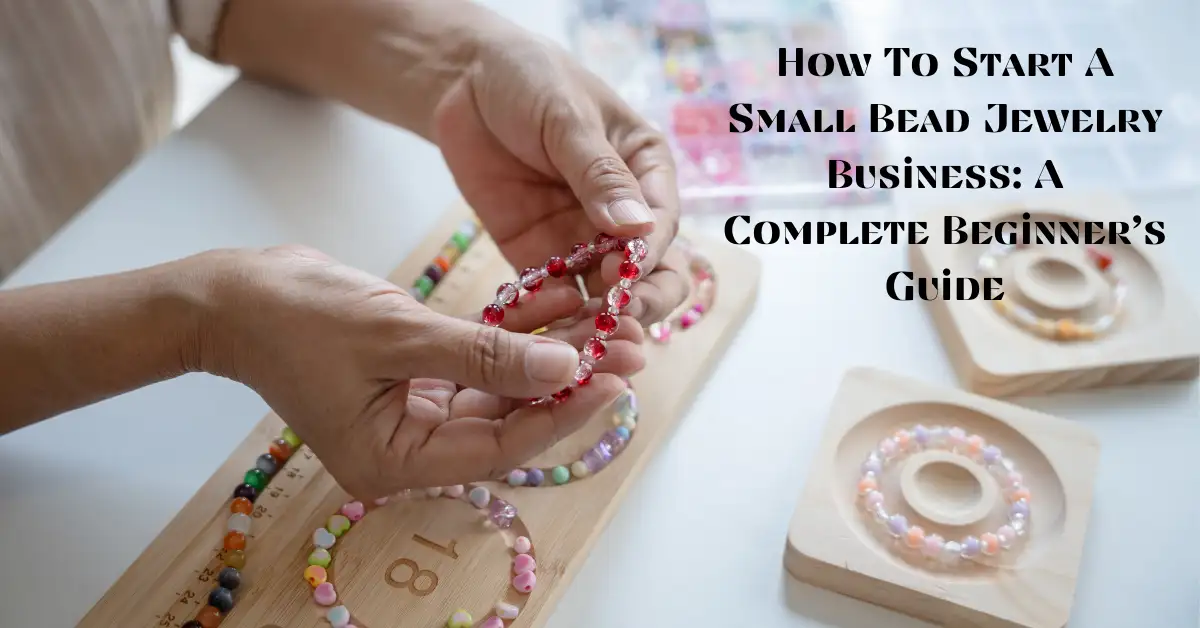
Bead Board: This tray has measured channels and bowls to help you plan necklace and bracelet lengths accurately before stringing.
Stringing Materials and Findings: Stock high-quality beading wire (e.g., flexible, multi-strand wire), various cords (leather, silk), jump rings, clasps (lobster claw, toggle), crimp beads, and headpins/eyepins.
Buying materials at retail prices destroys your profit margins. You must buy wholesale.
Wholesale Suppliers: Partner with specialized bead jewelry wholesalers or findings suppliers. Look for businesses that offer transparent grading (especially for semi-precious gemstones and pearls).
Focus on Consistency: If your niche is sterling silver, ensure all your findings (clasps, ear wires) are consistent in metal purity and plating quality. Cheap findings break down quickly and ruin the perceived value of your finished work.
Buy in Bulk: Once you confirm a design sells, buy components in bulk. The price reduction per bead or per clasp is immediate and significantly increases your final margin.
Pricing handmade jewelry is often the biggest hurdle for new bead jewelry business owners. You must price for profit, not just to cover your costs.
Before setting a price, determine your true cost.
Material Cost: Track the cost of every single bead, length of wire, and finding used.
Labor Cost: Set an hourly rate for your time (e.g., $20–$30/hour). If a necklace takes 45 minutes to make, your labor cost is 0.75 multiplied by your hourly rate.
Overhead: Calculate your monthly business expenses (website fees, tools, insurance, packaging) and divide that total by the number of pieces you make per month. Add that small amount to every single piece.
Use a standard industry multiplier to ensure you price competitively and sustainably.
Wholesale Price: This is the price you sell to a boutique or gallery. A standard formula is (COGS x 2) to (COGS x 2.5). You should ensure it with better precision.
Retail Price: This is the price you sell directly to your customer (e.g., on your website or at a craft fair). A standard formula is (Wholesale Price x 2) or (COGS x 4). This multiplier ensures you cover all marketing, administrative, and sales expenses.
Once you have inventory, you need a plan to sell it.
You need visibility where your customers shop.
Online Storefront: Establish an e-commerce website (Shopify, Etsy) with high-quality, professional photography.
Local Market: Sell at craft shows, farmers’ markets, and local retail pop-ups to get direct customer feedback.
Wholesale Accounts: Approach local, independent boutiques for consignment or wholesale deals.
Your packaging, brand story, and photography must be cohesive across all channels. Clear, high-resolution photos of your finished pieces are non-negotiable. Use social media (Instagram, Pinterest) to tell the story of your craftsmanship and the meaning behind your materials.
Starting a small bead jewelry business is an exciting journey that merges artistry with solid commerce principles. You can succeed with a strategic approach: finding a clear market niche, establishing quality standards through tools and wholesale materials, and accurately pricing your work for profit.
By committing to these foundational steps, you position your handmade jewelry to thrive in the retail environment, turning your passion into a rewarding business. We at JewelPin offer a range of bead jewelry, which will help you launch unique lines. Also, our low MOQs enable you to test your clientele's requirements and scale accordingly.