7 Days Shipping in “Ship Now” Collection
WORLDWIDE SHIPPING EXCEPT INDIA
Minimum Order Value: $1000
14 May, 2026
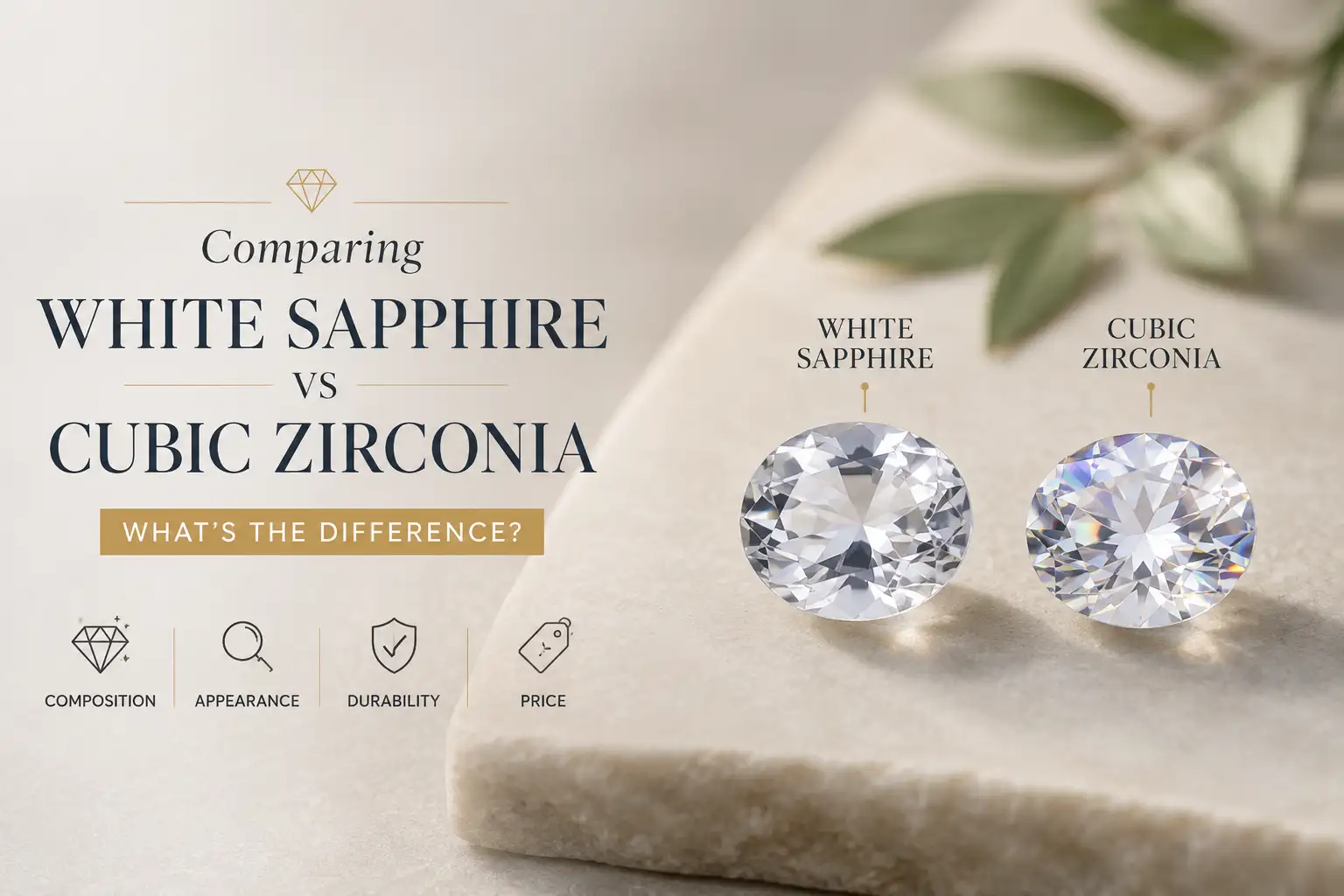
Comparing White Sapphire vs Cubic Zirconia: What's the Difference?
Since you are reading this blog, I am guessing you are confused between white sapphire and cubic zirconia. If you ask me honestly, the confusion makes sense. Both are clear stones, both are affordable, and both are often marketed as diamond alternatives. So, why would anyone think they are different?
But they are. And the differences matter far more than most people think, especially when you are spending money on something you plan to wear every day.
At Jewelpin, we work with these two stones regularly. So, whatever I share here comes from firsthand experience, not just textbook information. I think that context matters when you are comparing white sapphire vs cubic zirconia that look deceptively similar.
So, let's get into it.
I will keep this simple for you.
White sapphire is a natural gemstone. It belongs to the corundum family, yeah, you guessed it right, the same family that gives us blue sapphire and ruby. The only difference is that white sapphire has no color.
White sapphire is often found inside the earth, mined, and polished. Put simply, it is a natural stone, unless it specifically sells you a lab-created version. So when you make a purchase, consider learning about this.
Now, cubic zirconia is different. If I explain it in simple words, it is not natural. It is man-made in a lab using zirconium dioxide. Some people hear "man-made" and immediately lose interest. Others don't care as long as it looks good.
Both reactions are fair. I would say that it is completely subject to your preferences.
So, one is natural, one is not. But honestly, that alone doesn't settle the debate. The real differences between white sapphire and cubic zirconia start showing when you put them on your finger and live with them for a few months. That's where things get interesting.
Both stones sparkle. But the way they sparkle, that's not the same at all.
Cubic zirconia throws rainbow flashes everywhere. It catches light aggressively and honestly, for the first few weeks, it looks impressive. But if you ask me, that's also its problem. The sparkle is too much, so sometimes it almost looks like the stone is trying to convince you it's a diamond.
White sapphire is calmer. Its shine is more of a silvery-white glow rather than a rainbow explosion. Therefore, some people look at it as it seems to be clean, quiet, and elegant.
So, which sparkle is right for you? Well, it is subject to the kind of person you are. For example, do you want your ring to grab attention from across the table? CZ does that. Additionally, if you want something that looks natural and doesn't overdo it? White sapphire does that.
I personally lean toward white sapphire here. But I also understand why someone would choose CZ for the drama. No judgment.
Everything I said above is about how the stone looks. This section is about how long it keeps looking that way. And if you ask me why, I think this is the most important section.
The answer is simple: what is the point of buying a beautiful stone if it doesn't stay beautiful?
White sapphire scores 9 on the Mohs hardness scale. Diamond is 10. So, you are basically one step below the hardest natural material that exists. Simply saying, daily wear, cooking, typing, washing hands: white sapphire handles all of it without getting scratched.
Cubic zirconia (CZ) scores around 8 to 8.5. Therefore, it is also durable enough for daily wear.
Cubic zirconia costs significantly less than white sapphire. That is a fact nobody can argue with. If price is the only thing driving your decision, CZ wins and this comparison is over for you.
However, if you are the kind of buyer who thinks beyond just the price tag, consider this. The price difference between CZ and white sapphire is not that massive. But the price difference between white sapphire and diamond? That is massive.
So, white sapphire sits in this interesting middle zone. You pay a bit more than CZ, but you get a stone that is natural, harder, and lasts longer. And you don't have to spend diamond money for it.
For someone who doesn't want synthetic on their finger but also doesn't have a diamond budget, white sapphire is most probably the option they didn't know existed.
Now, if you are a retailer reading this, I think stocking both makes sense. CZ serves the customer walking in with a strict budget. White sapphire serves the customer who is willing to spend a little more for something better. Different people, different priorities. So, no matter which category your customer falls into, you have an answer for them.
Go with cubic zirconia if you are buying for occasional wear, or following a trend you might not care about next year, or if budget is genuinely the only thing that matters to you. CZ does its job at that price.
Go with white sapphire if you want something natural, something that handles daily life without fading, and something you won't need to think about replacing every year. It costs more upfront. However, it stays on your finger longer.
White sapphire and cubic zirconia are not two versions of the same stone. They look similar, yes. But one is natural and one is synthetic. One keeps its beauty and one loses it. One asks for basic care and rewards you. One doesn't ask for anything but also doesn't last.
If someone asks me which one I would recommend for daily wear, I would pick white sapphire. Not because CZ is bad, it serves its purpose well. But because the stone you wear every day should still look good a year from now. And white sapphire does that. At Jewelpin, we have seen enough of both stones to say this with confidence.