7 Days Shipping in “Ship Now” Collection
WORLDWIDE SHIPPING EXCEPT INDIA
Minimum Order Value: $1000
12 May, 2026
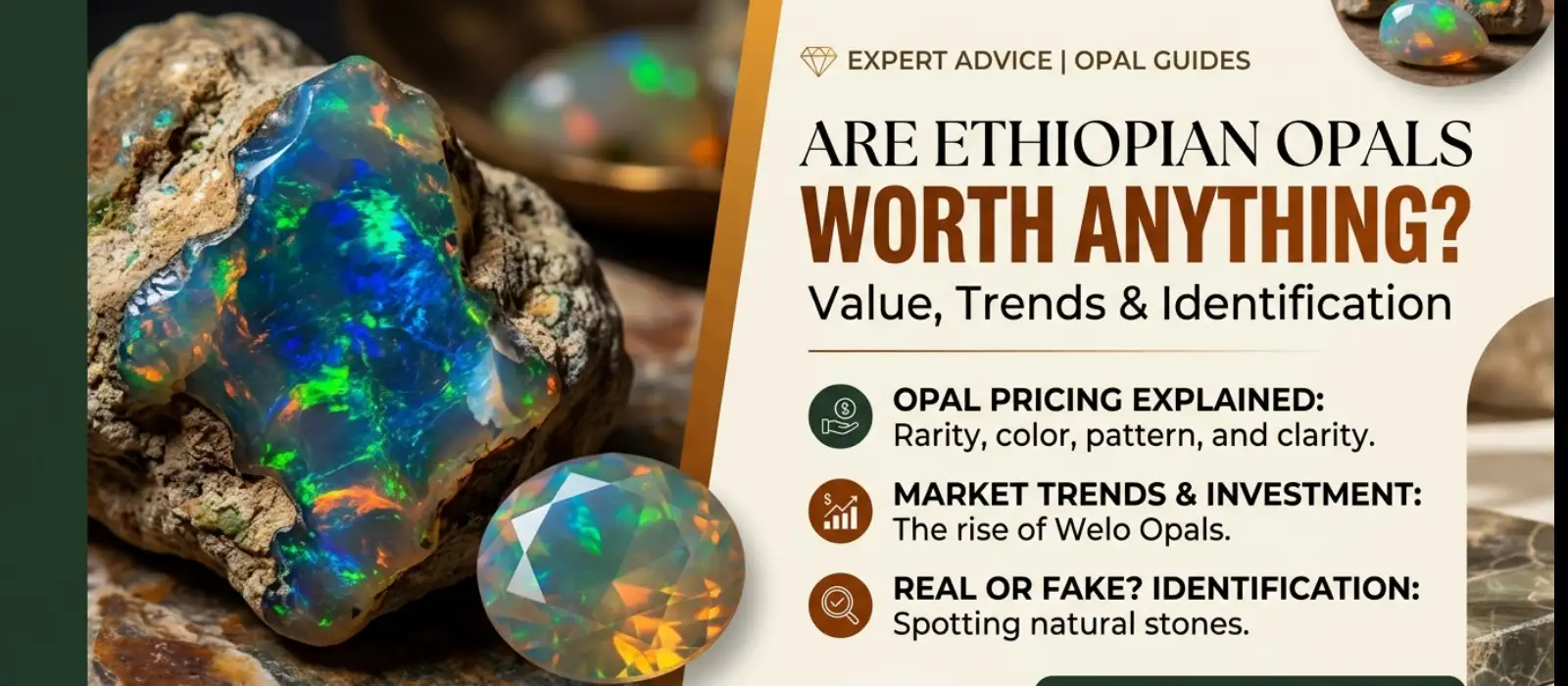
Are Ethiopian Opals Worth Anything?
It's a fair question. Ethiopian opals have flooded the market in the last 15 years. When any gemstone becomes widely available, people often ask whether it still has any value, financial or otherwise.
The short answer is yes. They’re worth something, but their value is not fixed. Its value depends on several factors. It is essential to understand those factors to estimate the value of Ethiopian opal.
So, let’s start by understanding the factors. But, before that, let’s understand where the Ethiopian opal sits in the market.
Ethiopian opal is relatively new in the commercial market. It was first discovered in 1994, but it became mainstream in the market around 2008, reaching international buyers.
Before 2008, Australian opal was popular among people. It was referred to as the benchmark by which all other opals in the market available were measured. When Ethiopian opal entered the market, its striking colour play and affordable pricing made it noticeable among the buyers immediately.
Fast forward to 2026, and the Ethiopian opal has a clear position in the mid-to-premium range of the gem market.
In short, the Ethiopian opal market is still maturing. Therefore, the prices haven’t been fully established, and that creates both opportunity and risk for buyers.
Ethiopian opal is a natural gemstone formed over time. It is not an imitation stone. Most of them come from the Welo region of Ethiopia and become mainstream in the global gemstone market.
Today, Ethiopian opal is sold in fine jewelry and used in designer collections. Additionally, you can also find it in the wholesale gemstone market.
Play of color is the most important characteristic of the gemstone. The worth of Ethiopian opal depends on its play-of-color, which is similar to a rainbow. Additionally, each opal is unique, not two opals are the same. For example, some stones might show red, green, blue, or many colors at a time.
Simply put, the brighter the color play, the higher the Ethiopian opal's value. Red flashes are rare; opals with red patterns will ask for a higher price.
Another factor is the clarity. Ethiopian opals are available in different clarity, such as crystal, slightly milky, cloudy, or hazy.
As a general rule, clear stones with bright color play are more valuable. Cloudiness, on the other hand, can alleviate visual impact, therefore affecting the pricing directly.
Size matters a lot in defining the worth of Ethiopian opal. Generally, larger Ethiopian opals complemented by vivid color have higher worth. In contrast, large stones with weak color patterns have slightly lower worth.
Simply saying, size also impacts the worth of the opal, but color has equal importance in doing so.
Carat is one of the most used factors to measure jewelry, and so is opal. The more the carat weight is, the higher the opal's value will be.
Additionally, the availability of large gemstones is limited; therefore, they are often sold at higher prices.
Cut is one of the most ignored factors, but it affects the worth of the opal gemstone significantly.
If you are planning to buy an opal that shows color evenly, looks balanced, and reflects light properly, then a well-cut opal is needed, which demands premium pricing.
Put simply, a well-cut opal is worth more.
The additional factor to be evaluated when estimating the worth of the Ethiopian opal is knowing its condition, whether it is natural or treated.
Not all Ethiopian opals reach the market in their natural state. Many are treated to improve their appearance. The goal of treatment is to make the opal livelier.
Put simply, the treatments make the opal visually appealing, but they change the natural properties of the gemstone. Additionally, it also affects the value; treated gemstones are often less valuable.
Natural gemstones have their original formation, and treated ones reflect human intervention. Also, treated stones may not age the same way, which also reduces their worth.
So, when you evaluate the worth of Ethiopian opal, you should always be clear about whether it is a natural vs treated gemstone. ̧
Indeed, Ethiopian opal is a highly demanded gemstone, but its value is not created by the stone alone. Its worth is also determined by the demand.
In 2026, Ethiopian opals are currently in demand; therefore, their price is highly determined by it. Additionally, it can also fit into modern jewelry, which increases its worth further.
Typically, as demand increases, the price becomes higher and more competitive. Simply saying, the worth of Ethiopian opal is not static, it is dynamic and varies according to market demands.
There is no clear answer. No gemstone should ever be considered a financial investment, and Ethiopian opal is no exception.
Market shifts, taste changes, and the decision to consider it as an investment should be met with scepticism. Indeed, Ethiopian opals have always been appreciated, but there is no guarantee that circumstances will remain the same. If the market changes, the value of Ethiopian opal may increase or decrease.
Moreover, Ethiopian opal benefits from one trend that is not expected to fade away, which is the growing interest of younger generations in buying coloured gemstones. Additionally, diamonds are no longer dominating the purchasing decisions; opals, with their visual appeal and affordability, are making them more popular.
So, the simple answer will be to buy Ethiopian opal only when it excites you, rather than considering it as an investment option.
Yes, Ethiopian opal is worth quite a lot, and that is determined based on several factors as discussed in the blog. The demand for the gemstone is growing rapidly, and affordability makes it popular among the younger generations.
So, if you are planning to buy Ethiopian opal then consider these factors to know the estimated worth of the gemstone. At JewelPin, we have a collection of Ethiopian available for wholesale purchases at affordable prices, Let us know your needs, and JewelPin will help you meet them